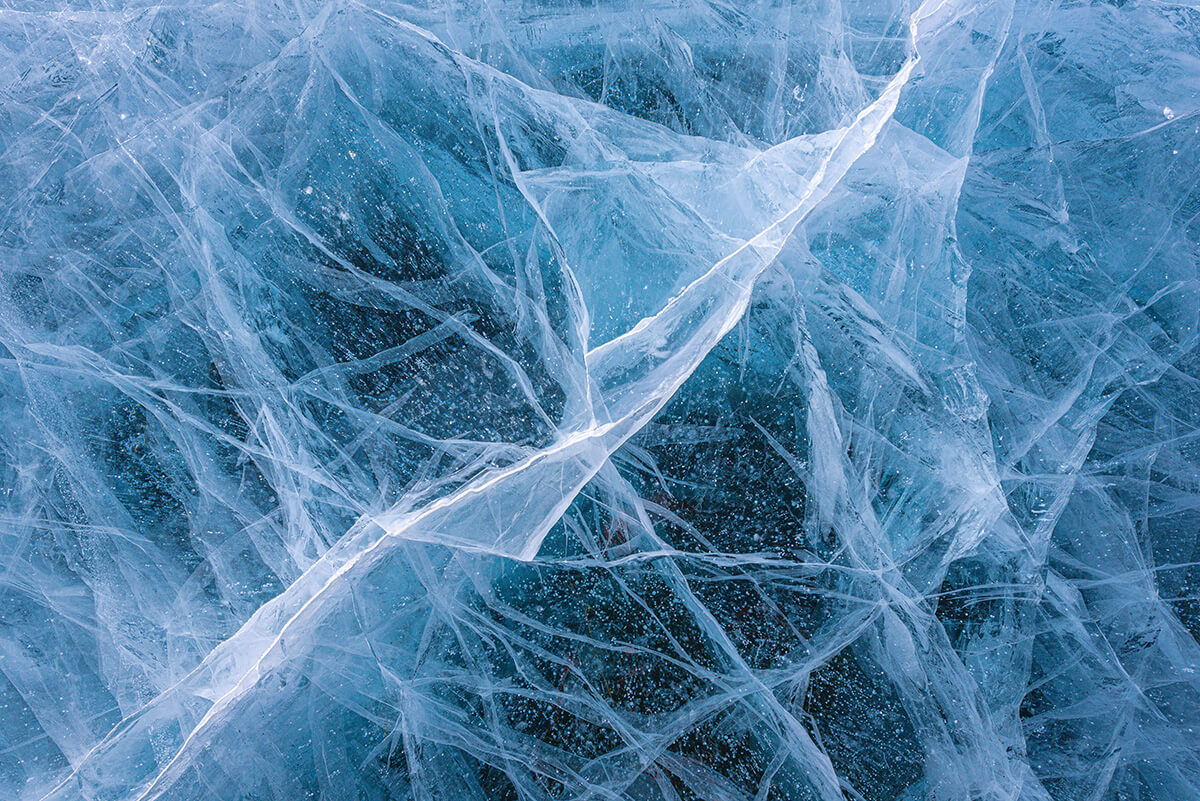
Photo by sakarin14 via Adobe Stock
Arctic Canada is filling with puddles.
Springtime in the Yukon looks astonishingly similar to June in Ontario. The days are long. Deer bite the heads off flowers deep in the forest. Icy mountains still loom in the distance, but here in the city of Whitehorse, wet mud squishes with every step. People wear shorts and t-shirts. Trucks are parked in nearly every driveway, dried clay caked onto their tires. Spring in Whitehorse is beautiful, if you forget that it comes at the cost of a forever-changed climate.
Annual mean temperatures in northern Canada have increased by 2.3 C from 1948 to 2016, with temperatures rising most rapidly in the Yukon and the Northwest Territories. By 2019, a new report from Environment and Climate Change Canada revealed that northern Canada, specifically the Yukon, is warming three times faster than anywhere else because of Arctic amplification.
Arctic amplification is like a magnifying glass reflecting off a mirror: heat from the sun bounces off the bright landscape, which then mixes with warm water vapour in the atmosphere. This heat isn’t being absorbed in the ground because of the ice, so it has nowhere to go: heat rises, but it becomes trapped in the atmosphere. As more ice melts, more vapour is created, which then causes the ice to melt even further. Essentially, Arctic amplification means that the region is caught in an intense greenhouse gas effect leading to biodiversity loss, habitat degradation, and mudslides.
For residents of northern Canada, the effects of the climate crisis are being felt faster and more aggressively than any policy can take effect. They’re threatening Indigenous ways of life that have been in place for thousands of years, making it increasingly difficult to pass down spiritual and cultural customs to young people. They’re also threatening the very ground the North is built on. But the climate crisis isn’t exclusive to the Yukon—if the oldest (and coldest) parts of the Earth are heating up, it signifies a dangerous warning to the rest of the world.
*
Indigenous communities throughout the Yukon and Alaska regions have depended on Chinook salmon as a key food source for millennia, moving along the 3,190 kilometre-long Yukon River to fish. Brooke Woods, a Koyukon Dene woman, is a tribal citizen of Rampart Village and grew up on the Alaska side of the Yukon River. She spent six years as executive chair for the Yukon River Inter-Tribal Fish Commission and currently works for the Woodwell Climate Research Center in Alaska, focusing on climate policy and fisheries management. She stresses that the salmon aren’t just food for her community; salmon fishing is also a livelihood with a deep spiritual connection. It’s important to people to use all parts of the fish, and it’s common to find salmon skeletons mounted above Dene doorways. “[Our] communities are along the Yukon River for a reason. We are salmon-dependant people,” she says.
But now, climate change is leading to the continued loss of the salmon: an essential part of the Yukon River’s ecosystem that was once abundant along its stretch. And Indigenous people in the area have largely resorted to buying salmon from other areas or trying to harvest other fish due to the decline. “So many parts of our life have changed because of the salmon declines…impacting us mentally, physically, emotionally, spiritually and culturally,” Woods says.
Chinook salmon differ from Atlantic salmon on the other side of the country because of one key factor: they die less than a month after spawning. They also take up to eight years to reach maturity and reproduce. Though salmon live most of their life in saltwater, their eggs need freshwater to hatch. Because of this, the adult salmon usually return to their own birthplace to release the next generation of spawn, with females laying between 2,000 to 10,000 eggs. However, climate change is altering these freshwater rivers quickly, and the salmon eggs are soft and highly sensitive to temperature and environment. When the water is too warm, too polluted, too salty, or just too different from what it used to be, the hatchlings can’t survive. Right now, only about one percent of chinook salmon eggs survive to adulthood. In other words, climate change is a factor in degrading the salmon’s habitat beyond survivability.
Researchers at the National Oceanic and Atmospheric Administration (NOAA) in the U.S. believe warmer waters make it harder for Chinook salmon in the river to keep a healthy diet and stabilize their metabolism. According to the NOAA, salmon grow faster in warmer water but struggle to find prey—like other small fish or invertebrates—meaning they will lay fewer eggs and have a lower chance of survival. Warmer rivers are also causing salmon to die from heat stress, according to a study from the Canadian Journal of Fisheries and Aquatic Sciences. The United States Environmental Protection Agency (EPA) also reports that as temperatures rise, it’s harder for water to retain its oxygen levels. Salmon—like all forms of aquatic life—need stable oxygen levels to survive. When the water gets too warm and the oxygen levels deplete too much, salmon suffocate and die.
In April 2024, the U.S. and Canadian federal governments teamed up to create a historic—yet controversial—agreement: ban all Chinook salmon fishing in the Yukon and Alaska for seven years in an effort to grow the population. According to the ban, both First Nation and Tribal subsistence fisheries—the method of harvesting fish specifically involving Indigenous knowledge and traditions—is prohibited “when there are fewer than 71,000 adult Chinook salmon.” Once this number is met, limited commercial, personal, and sport fishing could begin again. The salmon are counted by sonar at several sites in the region, and in 2023, only around 14,000 Chinook were counted at the Eagle sonar site near the Canadian border.
Detailed tracking of the Chinook salmon population began in the 1980s. According to the EPA, in 1984, around 1.2 million Chinook were tracked at the southernmost part of their migration—the Salish Sea region of the Pacific Ocean. With over 3,000 kilometres of migration from the Yukon River, through the Bering Sea, down to the Salish Sea before coming back up the Yukon River again, Chinook salmon have some of the largest migration patterns in the world. But fewer and fewer Chinook are surviving this migration for long enough to make it to their spawning grounds.
The 2024 Yukon River Chinook salmon run—the annual migration of salmon along the river to spawn—was the third-lowest in history, with fewer than 65,000 salmon making the voyage to the Pilot Station—the closest sonar site to the mouth of the river. Of those fish, an estimated 24,112 passed through the Eagle Sonar site near the Yukon border. The worst year on record was 2022, when an astonishing total of 12,025 Chinook salmon were counted for the season through the Eagle sonar site. This number is 80 percent lower than the historical average; some previous years have seen up to 500,000.
At the heart of the salmon run is Whitehorse. Whitehorse holds the world’s longest wooden fish ladder, a structure crucial for letting salmon pass through to their spawning grounds. It looks like a winding staircase filled with flowing water: salmon instinctively migrate and seek out changing currents. The water attracts the salmon, who swim upstream, jumping from step to step. Just like a staircase, these ladders have steps that allow the fish to “climb” upwards: this is especially helpful if parts of the river are blocked by dams or other predators waiting for their next meal. Conservation groups monitor the Whitehorse fish ladder yearly and use sonars to track how many fish pass through.
Jordan Blay has lived in the Yukon since 1985, and grew up fishing in Annie Lake 50 kilometres outside Whitehorse. He notes salmon, halibut and several types of trout among the fish he could catch around the Yukon and Alaska. “The record was 18 castes, 18 fish,” he says. However, in recent years, he says there are considerably fewer fish in large bodies of water, like the Yukon River.
Blay describes the spring of 2022 as “abysmal” for salmon. “If I remember right, it was something like six fish went through the ladder,” he says. Hardly any fish were seen on some days. Blay’s estimation isn’t far off: fish ladder supervisor Amy Jacobsen told the CBC that only 13 salmon passed through by August 10, 2023. More fish passed through after this, but August is the height of their travels.
When numbers are low, Fisheries and Oceans Canada prohibits sport fishing. Depending on the numbers and body of water, a prohibition can affect both personal fishing and Indigenous subsistence fishing. However, even if not explicitly stated by Canadian or Alaskan governments, First Nations leaders often voluntarily ask their citizens to refrain from fishing when the populations are in decline.
Historically, Indigenous-operated fisheries have had more robust fish populations than modern commercial fisheries due to longstanding practices of environmental reciprocity and continued traditions surrounding the Earth’s seasonal cycles. Woods explains that the salmon decline is a relatively new phenomenon. “We do have 10,000 years of relationship with salmon, and we have always maintained our cultural values when it comes to harvesting king [Chinook] salmon,” she says. “That has been successful, that has kept salmon runs alive and well.”
Woods says the low salmon population could have disastrous effects on future generations, noting that cultural traditions and education are passed down from older family members, and how she learned from her mother and grandmother when fishing. “Growing up, we had multi-generational family members coming together to harvest, process and share salmon,” she says. She’s concerned younger community members won’t be able to learn in the same way she did, which will pose serious challenges to their health and culture.
*
Apart from warming the Yukon River, climate change means the physical landscape of the Yukon is shifting. Deep below the surface of the Earth in northern Canada is permafrost: permanently frozen soil and sediment held together by ice. The Yukon has some of the oldest pieces of permafrost in the world, with scientists estimating it’s been in place for three million years. In Whitehorse, permafrost accounts for up to 50 percent of the ground’s surface, according to Yukon University. Because of climate change, the permafrost is now melting.
“One of the biggest ways we see issues with permafrost in our human environment is probably through infrastructure and the highways,” says Alison Perrin, a senior research professional at Yukon University’s Research Centre. Perrin has been researching climate change and climate change policy in the North for the last 10 years. “It’s kind of like the supporting foundation of the North.”
In the same way a foundation provides stability for a house, permafrost creates stability on the ground in northern Canada. The crumbling permafrost threatens the livelihood of the communities—like the Kluane First Nation—that have existed in these remote areas for thousands of years before Canada was colonized.
Shirley Smith is an Indigenous Elder from the Kwanlin Dün First Nation. Their traditional land is located in what’s alsoknown as Whitehorse. One of her biggest worries is how the next generation will be able to learn about cultural traditions and living off the land sustainably. Warmer winters with increased precipitation meant that one winter, she had six feet of snow alongside her house, making it difficult to get to cultural and sacred sites.
Climate change presents a real threat to Indigenous communities’ abilities to pass their cultures and spiritual practices on to next generations. Smith says that the best place to teach younger generations about climate change is on the land, recalling that some of her traditional knowledge about hunting and fishing sustainably was passed down by her father on trips. But these lessons aren’t being taught as much anymore, she says. Still, any time at all learning from older people is deeply valuable for younger ones. “Even if they just go for two days, three days, teach them or show them how to live off the land,” she says.
Alongside threatening Indigenous ways of life and knowing, warming ice can also mean physical danger. Communities in northern Canada are remote and far between, leaving people with few options when it comes to emergency evacuations. Perrin uses Nunavut as an example of one place in the North where people’s ability to survive in the winter depends on stability below them in the forms of ice and permafrost. Communities in the North are mobile, moving to different locations to fish, trap, hunt. It’s about survival, tradition, spirituality, culture and lineage all at once. But this mobility isn’t possible when the ice cracks: suddenly, a longstanding tradition of walking across a frozen river doesn’t guarantee safety. And yet, “their lives depend on going out on the ice,” she says.
Only 30 kilometres outside of Whitehorse, reports have been made about tears in the Earth from the permafrost melting, causing trees to collapse as the dirt breaks open. These physical changes can mean less stability on the Alaska Highway, a 2,400-kilometre road that runs through B.C., the Yukon and Alaska. The highway is an essential method of transportation connecting remote First Nations communities and importing goods to northern areas. If parts of it become unusable, it could seriously threaten these communities’ health and wellbeing.
Further, melting permafrost can cause other issues: methane, carbon dioxide or potentially toxic microbes are often found within the sediment, furthering the overall problem of climate change, Perrin explains. “As permafrost thaws, it contributes to greenhouse gas effect,” she says.
Part of Perrin’s research investigates how climate change affects the Yukon over long periods. One report she coauthored, titled “Yukon climate change indicators and key findings,” published in 2022 by Yukon University’s Research Centre, looks at how the volume of Arctic sea ice has decreased since 1979. With a melting rate of about 300 cubic kilometres per year, the report estimates that most ice that was there in total has melted within the past decade.
Permafrost thaw, warmer temperatures and wildfires can cause extreme events like the landslides in Whitehorse, something that would have been unheard of until just a few years ago. For residents, the North is quickly becoming unrecognizable. Willow Brewster, a paramedic who’s lived in Whitehorse since she was a toddler in the 1990s, says she remembers long, frigid days too cold to hold a snowball. Now, she says, there’s sometimes slush in December and landslides by spring. In July 2024, a landslide caused by massive amounts of rain—another symptom of climate change—caused an 82-kilometre highway closure. While no one was hurt, it left people unable to travel between Carcross, Yukon and Fraser, B.C. Landslides are one result of climate-change related permafrost melting, according to a 2023 Simon Fraser University and Yukon Geological Survey report.
“I was driving through puddles in December because all of the snow was melting because it was plus five [degrees],” Brewster says. “It’s [an] eerie kind of feeling where it just feels kind of wrong.”
Brewster also sees injuries becoming more frequent. Her grandmother, who has lived in the Yukon for several decades, fell in the ice in 2016. In 2022, two people fell into icy water when crossing a seemingly frozen river near Pilot Station, Alaska, resulting in one death. Brewster describes freezing temperatures as “sporadic,” and says you can’t always expect the ice to be consistently frozen anymore. Routine ice trips are increasingly deadly in February, when the ice should be sturdiest.
In December 2023, the Yukon government’s official response to climate change noted 42 new actions to fight it, specifically noting green energy, wildfire protections, and smart electric heating systems. There is no mention of salmon specifically, but there is an action saying the government will “work with First Nations and communities to address a gap in lake-monitoring to capture changes in water in order to support fish habitat protection and community safety.” While permafrost is not mentioned either, there is a promise to undertake “flood risk hazard assessments for Yukon campgrounds and other key public infrastructure in territorial parks.”
When it comes to climate change, even a two-degree temperature increase can have significant overall effects. It can be the difference between freezing and melting; an animal living or dying. Canada is currently a part of the Paris Agreement—the international treaty created by the United Nations wherein countries pledge to limit their emissions to avoid a two-degree increase. Yet the Yukon’s average temperature is three degrees warmer than it’s ever been.
Both our shared physical environment and entire ways of being that have been in place since time immemorial are under threat. Bans on salmon fishing and government incentives on green tech will not solve this in and of themselves. Instead, there needs to be a priority on centring the skills passed down through generations from Indigenous knowledge-keepers, living in balance with the land, and a focus on sustainability as a continuous way of life. There is irrefutable evidence that global warming changes every part of the world: from the tiniest oxygen molecules in the water to the vast permafrost in the Earth. And what’s happening in the Yukon is foreshadowing for everywhere else: the climate can’t change so drastically while everything else stays the same.
*
Indigenous communities have long been crucial to climate protection. According to the United Nations, Indigenous people have prioritized the environment for generations, meaning their contributions to the scientific community cannot be ignored. A pivot to two-eyed seeing is deeply necessary.
There are over a dozen First Nations in the Yukon, each with its own distinct cultural practices and communities. One initiative, called the Yukon First Nations Climate Action Fellowship, is trying to combine cultural traditions across the different nations with the fight against climate change by teaching young adults about biodiversity and living in harmony with the land. Dustin McKenzie-Hubbard, a member of the Champagne and Aishihik First Nations, loves being one of the 13 fellows because it inspires him to make the world better for his daughter.
McKenzie-Hubbard says the fellowship has focused on turning away from a colonialist and consumerist mindset and that a strong sense of community is essential in dealing with these problems. Addressing climate change means centring Indigenous people’s calls for climate protection and understanding. “Everything you do affects someone else and everything,” he says. “We have to be mindful of what our impacts will do for ourselves in the next seven generations.”
Woods stresses the importance of incorporating Indigenous knowledge into conservation efforts, something she says is “disregarded in so many management spaces.”
“We do have 10,000 years of stewardship that is not incorporated into the current Western science and governance structure,” she says, describing how important it is for knowledge to be passed down from Elders to the younger generations, especially when it comes to the salmon. “I want to be able to fish the same way my grandmother taught my mom, and the way that I’ll teach my children.”
]]>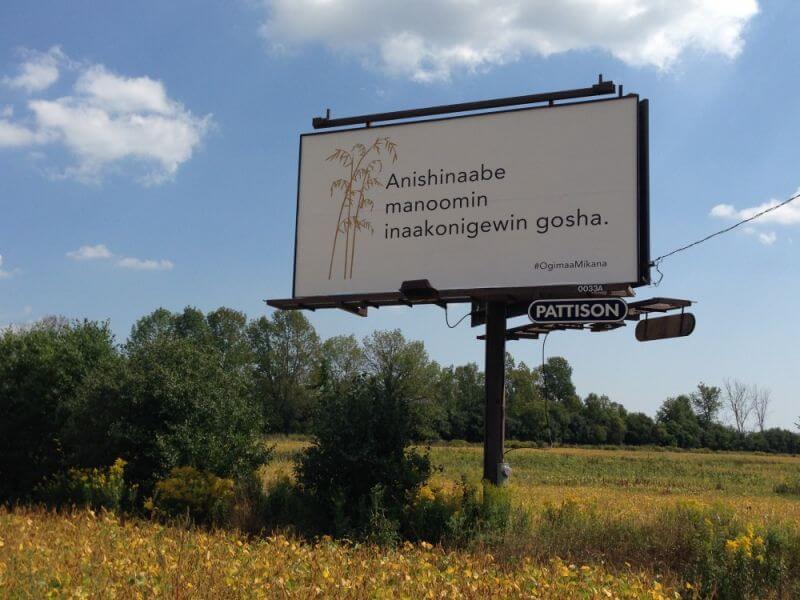
The Ogimaa Mikana Project aims to disrupt non-Indigenous Ontarians’ view of the land they occupy. As part of the project, billboards were erected across the Anishinaabeg territory—including Barrie, Toronto, Thunder Bay, and North Bay—to note Indigenous place names where settlers have taken over. “We are trying to promote the language, to centre and privilege it,” says project founder Susan Blight. (Photo courtesy of the Ogimaa Mikana Project.)
Every Canada Day long weekend, thousands of us leave smoggy cities and flood hurriedly north to summer homes. We can’t wait to escape to our little slice of paradise, our piece of the natural Canadian landscape we’ve dedicated to pleasure, relaxation, and tranquility. We spend the long weekend unplugged or revelling in one too many beers dockside pristine waterfront lakes, bounded only by bountiful forests and nature’s silence. Among the Great Canadian Outdoors, we celebrate Canada and the many wonderful things this country has to offer us. We launch fireworks, crush beer cans, or stare peacefully out into infinite skies with unabated pride. Cottaging has come to symbolize what the “good life” looks like to us, and celebrating Canada Day in the Great Canadian Outdoors is our patriotic practice.
But as we unwind in our Muskoka chairs this July 1 weekend, let’s take a moment to pause and consider the irony that is celebrating Canada Day on land that is so intimately connected to Indigenous communities and their land rights and losses. Let us consider that although Indigenous peoples played vital roles in early Canadian tourism as guides for hunters and other early travellers, they were systematically erased and relocated from land the government wanted to associate with parks and wilderness creation.
Take for example Algonquin Provincial Park and its surrounding “cottage country,” which today includes Barry’s Bay and Bancroft—home to thousands of Ontario cottages. This was land that the Golden Lake Algonquin never surrendered their rights to under treaty yet still were systematically displaced and removed from in the mid19th century, and consequently forced to live on unsustainable, overcrowded reserves. Since then, and until present day, the Algonquin continue to petition the government, insisting that they had neither surrendered this land nor been compensated for its loss. The land claim is still under negotiation 30 years after the process officially began in 1988 and remains a long way from settlement. There are countless examples of provincial parks and cottage country municipalities on which our cottages sit that is land Indigenous people never ceded territory to or were manipulated and shortchanged in the exchange.
We should all feel uneasy and troubled that land we’ve purchased for relaxation is the only land Indigenous communities have sovereignty over
Our cozy summer homes become even more problematic if we consider that some cottages actually sit directly on land leased by Indigenous groups to non-natives. In Ontario, for example, First Nations leased thousands of vacation homes to non-natives during the post-war period and built services that catered to these summer homes. In places like Sauble, Southampton, Hope Bay, or Crooked Lake, the docks we jump and swim from and the decks we barbecue and gather at are located directly on reservation land leased to us by Indigenous groups. You can call that an economic “opportunity” for Indigenous people to “make a buck,” or you can take the more historically informed opinion of Peter A. Stevens, who terms it a form of double colonialism. “After having lost their territories to European settlers and being forced onto reservations, First Nations [are] now leasing those reserve lands to the white descendants of their original colonizers,” he writes in an op-ed for ActiveHistory.ca in 2018. There comes a sense of great discomfort in such a realization, especially from the vantage point of a cottage home dedicated to all things comfort. We should all feel uneasy and troubled, or at the very least a little bit uncomfortable, that land we’ve purchased for the sole purpose of relaxation (for most of us, these are our second homes in addition to the homes and land we own in the city!), is the only land Indigenous communities have sovereignty over and yet are leasing to us, in most cases, out of economic necessity. Instead, around 2010, when many of the leases that were created post-war expired, and Indigenous groups failed to renew them, we settlers became outraged, upset, and emotionally fraught that our cottages—our slices of paradise—would cease and we’d be forced off the land.
You don’t even have to be outdoors overlooking the land from your Muskoka chair to reflect on the erasure of Indigeneity that takes place in Canadian cottage country. Those distinct Group of Seven paintings or prints many of us have adorning our cottage home walls—in bedrooms and in bathrooms—are another reminder of the intentional elimination of Indigenous peoples that has taken place across cottage country over hundreds of years. Have a look at any Group of Seven painting, and the Canadian landscape is depicted as pristine, untouched, and empty of all human and animal presence, explains Stevens in his oped. Yes, these paintings are iconic and beautiful, but viewed more critically, as some scholars argue, they also represent the erasure of Indigenous people who have lived for thousands of years in Canada’s wilderness landscape.
Some even argue, rightly so, that the Group of Seven’s fame produced a national art tradition that helped the Canadian government push an ethos that justified the removal of Indigenous communities in the name of wilderness creation and a “cottage country” vacant of human beings.
In a just world, Canada Day would represent a day dedicated to truth and reconciliation—a day devoted to the meaningful reflection on what we can do year-round as Canadians, personally, to contribute to the restoration of friendly relations between Canada and Indigenous peoples. It would cease to be a celebration of the Canadian government eliminating the jurisdiction and governance Indigenous people once had over their traditional territory, as it is today. For cottagers, this renewed celebration of truth and reconciliation might involve deepening our historical understanding of the land we love in all its complexity: researching and acknowledging whose land our summer homes occupy, learning about nearby reservations, and maybe even replacing Group of Seven paintings with local, contemporary, and historically accurate Indigenous art. Most significantly, this Canada Day long weekend, perhaps we cottagers can put down the beer and our smug sense of pride and begin to acknowledge (as Indigenous knowledge teaches) land as the sacred, living entity that it is, with its own rhythms and cycles, and us as mere stewards of the land, never owners. Perhaps this can be a first step in our search for truth and reconciliation from cottage country this Canada Day long weekend.
]]>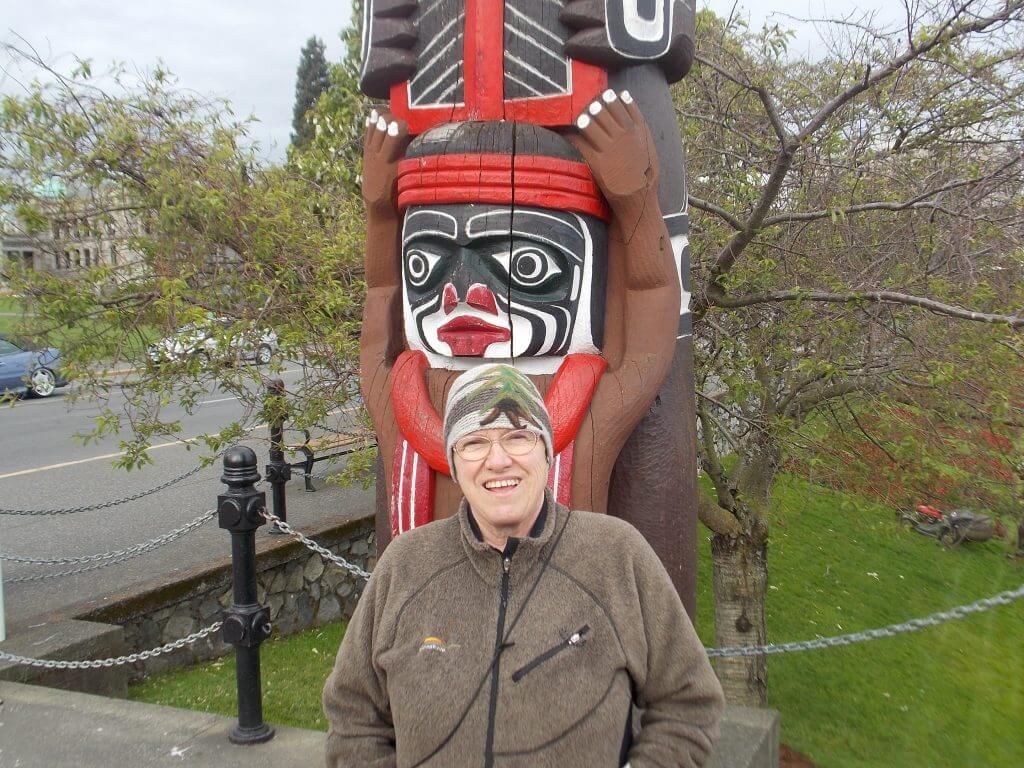
Lorraine Loranger in Victoria, B.C.
Half of the children in Canada’s foster system are Indigenous. For Inuit children, government care often means being relocated hundreds of kilometres south in total isolation from their family and culture. Siblings are separated, and contact to their communities and families in the north is limited.
Allies in the south can help magnify Inuit voices, and increase nation-wide awareness of the issues facing geographically separate communities. Lorraine Loranger is one such ally who has dedicated the last three years of her retired life to walking 8,000 kilometres across Canada telling the stories of our country’s Inuit. As a social worker in Nunavik, in northern Quebec, Loranger bore witness to the situation facing many families across Inuit Nunangat—Inuit regions in Canada, such as Nunavut. She is calling for culturally appropriate solutions, increased government support in the form of community-based safe houses or women’s shelters, and access to proper dignified housing for all Inuit.
In order to understand the issue, we must look to the past. Inuit lived nomadic, self-sufficient lifestyles for thousands of years. But, in the 1950s and 1960s, the Canadian government aggressively encouraged their settlement in permanent communities, promising housing, education, and health care as incentives. The Inuit slowly settled into sedentary lifestyles only to find government support aiding their transition fell radically short. Beyond issues of food security, housing has been lamented against as one of the most urgent crises facing northerners. Poorly constructed homes unfit for winter conditions are overcrowded and often dilapidated. It is common for families of 15 to 20 spanning four generations to live together in small three-bedroom homes. This can create unhealthy situations for many children, who are often removed by child services and sent into the foster system if the situation isn’t rectified.
These federal malpractices are what Loranger is fighting to change. She founded an organization, No Child Should Have to Take the Long Way Home, to support her 8,000-kilometre trek, which began on April 9, 2016, in Victoria B.C. She is currently in central Ontario with 2,418 kilometres left to go before completing her journey in late October in Ingonish, N.S. Along the way, she is working in partnership with Inuit associations, such as Saturviit, an Inuit women’s non-profit, to stimulate action to improve government funding in Inuit Nunangat.
“They lack access to justice,” she says of the families she worked with. “The children are being taken, and apprehended from their homes, and sent all over Canada.” Cramped conditions and a long history of systemic abuses exacerbate health concerns and domestic disputes for many families, necessitating child services involvement. However, once a child is removed from their family, it is almost impossible to bring them home. “They hardly ever come back,” says Loranger, “because the judge will say to [the parent], you have exactly one year from today to correct the situation… now nobody can correct the situation in a home where there are 20 other individuals.” Instead, families experience devastating losses of their children, and are often helpless to improve the situation with no means of accessing appropriate housing.
Children may also experience a great deal of instability after being removed from their homes. Loranger noticed the incredibly high rate in which children from the villages she serviced were being bounced around from placement to placement in the foster system. “When I worked there they had 96 kids [in the system] and out of 96 kids, 41 had been moved from 20 times to 56 times, all the other kids had been moved more than once.” It is facts such as these that Loranger uses as fuel on her mission.
She refers to her 8,000-kilometre trek across Canada as a “walk to talk, not a walk to walk.” It is not a continuous path from coast to coast; rather she is walking the distance while giving lectures in various communities as opportunities arise. Adding new companions this year, Loranger is now accompanied by her two Inuit marionettes, which she built with the help of some friends she met during her travels. “It’s going to bring more visibility to the project,” she remarks. The marionette duo is a fun tool that Loranger uses during her lectures to help highlight the Inuit perspective in her message.
Loranger’s speaking engagements serve a dual purpose: to raise awareness to the social issues facing Canada’s Inuit population, and to stimulate government action through citizen engagement. Last year, for example, she wrote letters to 300 of the people she met along her journey, “I asked them to write to their MPs about the situations that needed to be addressed in the north,” she explains, “such as housing, such as women’s shelters, such as protection of children in their own communities rather than outside their communities.” Putting pressure on members of parliament to bring Inuit issues forward to Prime Minister Trudeau is how Loranger is working to stimulate change in northern territories.
Her walk is coming to an end later this year, but Loranger has no intention of stopping her advocacy work. “I’ll continue working on the project, but I’ll be doing it sitting in a chair,” she says, “there has to be a lot more fundraising, so I’ll be organizing campaigns for the next few years.” In addition to fundraising, Loranger plans to write a book about her travels. In the end, she says, “It’s all to generate hope for the Inuit.”
]]>
Photo by Fubarfoto.
With the first chord of “Burn Your Village to the Ground,” the song accompanying a burlesque act titled “Not Your Stereotype,” a transformation begins. The figures on stage, dressed in racist caricatures of Indigeneity—feathered headdresses, wearing “Indian” Halloween costumes, carrying “Made in China” dreamcatchers—begin to shed their layers. The commodified image of the “Indian” is peeled away, and then the group performs a reverse strip, putting on new burlesque regalia to reveal their true identities. This is Virago Nation, Turtle Island’s first Indigenous burlesque collective.
Vancouver-based Virago Nation engages burlesque performance as a tool of reclamation. It’s through rematriating Indigenous sexuality and identity that community building, workshops, and performance are able to interrogate the racist, oppressive structures of colonization.
By using a colonial register of communication and culture—burlesque—to represent themselves publicly as Indigenous, Virago Nation enacts femininity and sexuality on their own terms. By archaic definitions, virago refers to a woman of “masculine strength or spirit,” or, a female warrior. Today, the term refers plainly to an ill-tempered, domineering woman. This shift in meaning—from one of female empowerment to one intended to strip agency—makes convening member of Virago Nation Shane Sable chuckle, because, of course, it’s all part of the fun.
Virago Nation formed in May 2016 when Sable, feeling uninspired and burnt-out in her work, wanted to build a community of support. She asked five friends to meet at the Heartwood Cafe, a now-defunct community hub for marginalized folks in Vancouver, for brunch. Sable invited everyone to introduce themselves while fully embodying their respective Indigeneity, approaching each other free and in spite of colonial expectations. But what first started as an informal group to share ideas and inspire one another became the formalized burlesque group they are today.
The collective uses each performance to leverage a calculated interrogation of the broader sociopolitical landscape in Canada. For example, they use what Sable calls “burlesque regalia”—ceremonial regalia adapted specifically for burlesque—as a tool in their performances to demonstrate postcolonial hybridity and identify each Virago’s heritage. By stripping off layers of costumes in their performances, they seek to strip the weight of the colonial gaze with conviction and freedom. In this way, the performances allow the group to participate in new cultural production while paying respect to traditional Indigenous art.
Virago Nation also offers workshops on pastie-making, burlesque movement, and other artistic skills pertaining to the rematriation of Indigeneity. By doing this, the group hopes to promote the art of burlesque as a tool of empowerment. “Because of the cultural genocide that’s taken place across Turtle Island, people have varying degrees of contact with their traditional cultures.” Sable says. “Burlesque can help bridge some of that lack of connection.”
Most importantly, Virago Nation strives to facilitate positive experiences for members of Indigenous communities, knowing the impact it may have on others’ lives.
“When we were in Las Vegas performing for the Burlesque Hall of Fame, we received a message from an Indigenous woman that said, ‘I didn’t know that I wasn’t alone,’” says Sable.
According to the group, this reaction—a feeling of sudden belonging, like finding one’s long lost family—comes up regularly, confirming the need for Virago Nation’s mission.
Ultimately for Virago Nation, it’s all about rallying for a return to pre-colonial matrilineal power structures and building a community that embraces the identities and supports the flourishing of Indigenous people, especially women, everywhere.
As for their next steps, Virago hopes to tour rural Indigenous communities to help share their positive representations of Indigenous women and to one day create an community where all Indigenous women can be Viragos. Sable says: “We want there to be others after—and alongside—us.”
]]>
This year, Canada celebrates 150 years since Confederation. It’s a milestone that’s been marketed since the clock struck midnight on January 1: There are parties to go to, maple leaf-encrusted foods to buy, special landmarks to take selfies with. Celebrating Canada’s birthday this year should be, according to many, a fun time.
But it’s hard to celebrate when we consider how much work still needs to be done to make this country one that supports and encourages its minority communities. Indigenous women and girls in Canada still go missing and are murdered regularly. Black men are still harassed, violated, and even killed by police on our streets. And, most recently, in our very own industry, professionals have made a mockery of appropriation, with some of the most influential players calling for a prize in its name.
In our July/August issue, we shed light on many of these issues. But we felt it wasn’t enough. So, we reached out to Indigenous writers and writers of colour, asking them what they think of Canada 150. It is crucial that we hear from these voices, which have so frequently been silenced or ignored in discussions about 150, our country’s industries, and what still needs to be changed.
This feature is a living document—it is intended to grow and change with time. If you are a person of colour or an Indigenous Canadian, please send your own thoughts on Canada 150 to [email protected], and we’ll include them here.
This isn’t just a time to celebrate. It’s a time to reflect, to resist, and to enact change.
–ERICA LENTI, editor
Canada 150 is a moment to celebrate the 150 ways that Canada has let me down. 150 catcalls. 150 tranny slurs. 150 Canadian white boys terrified of intimacy. 150 conversations about the problems with “the natives.” 150 poetry readings with racist poets. 150 therapy sessions for intergenerational traumas from genocide. 150 Starbucks coffees. 150 white guys on Twitter telling me to die. 150 excuses for colonial excuses. 150 dead Indians everywhere every day without no end in sight.
But let’s be honest with each other? We come to each other in pieces. Canada is not a whole being. So let’s celebrate 150 kisses down my neck. 150 chances to start again. 150 days of medically supervised hormone replacement therapy. 150 days of a gender and name change without complication. 150 breaths sleeping beside a Canadian boy I love. 150 snowflakes in Calgary. 150 steps up a mountain in Banff. 150 moments to change society. 150 Indigenous women getting up and making it through. 150 words in Anishinaabemowin. 150 years of resistance. 150 plays of Feist. Canada, let’s talk about the 150 ways you break my heart but don’t forget the 150 ways you hold me together.
–GWEN BENAWAY, Annishinabe/Métis poet
There’s always something that’s made me anxious about CanLit. It’s the same thing that makes me anxious about Canada 150, though until recently I hadn’t been able to put my finger on it precisely.
I am Tuscarora of the Haudenosaunee Confederacy. Canada as a nation depends on my repression; or better still, my assimilation; or best of all, my disappearance. Though the treaties my ancestors negotiated and signed are the legal basis of this country, my ancestors’ existence has also been incredibly inconvenient to the national narrative. Canadians want to think of this country as good, moral, polite—better in a thousand ways than their louder, brasher neighbour to the south. It’s a nice fairy tale when you’re a certain kind of child, the kind that claps and dances during Canada Day celebrations, staring at the flag with reverence and wonder. That flag is why you are here, after all. That history is why you are here.
It’s why I’m here, too—trauma trailing me like a killer, taunting me every time I have to Google translate a language that’s been beaten from my blood as per national policy. I have never believed patriotic fairy tales; after all, Canada has never been good, moral, or polite to my people. Therefore I do not celebrate Canada’s Confederation. Instead I celebrate the ways my own nation has survived despite every Canadian attempt to destroy us. That celebration can’t be collapsed into a single moment, a “birthday”; it’s ongoing, never-ending—a resistance far older than Canada’s 150 years.
This brings me to the issue of CanLit. The literature of a nation builds that nation up: letter by letter, line by line. Each book a brick making it sturdier, more legitimate. When that nation continues to deny its hand in colonialism and, further, refuses to address it, how can I in good conscience agree to be part of its national literature? The fact that my work can be branded “CanLit” even as I’m writing about my people, for my people, on my peoples’ land feels like another attempt at assimilation, another denial of my identity, my sovereignty as a Haudenosaunee woman and writer. In this country, at this time, I must agree to be swallowed up by CanLit. There is no space for me otherwise.
But my writing isn’t Canadian. My writing is Indigenous. My stories are Indigenous. They will never build up the nation dedicated to tearing my own nation down. I can’t celebrate CanLit as an institution any more than I can celebrate Canada 150. I can admire Canadian writers and their work, consider them friends and allies in my struggle to assert my right to be myself. I can be a friend and ally to them in their struggles to assert their rights to be themselves. But my literature can never and will never be Canadian. It is forever and always Indigenous, and should be considered such.
No matter how many “birthdays” Canada celebrates, Indigenous people, Indigenous literature will always resist. So will I.
–ALICIA ELLIOTT, National Magazine Award-winning Haudenosaunee writer
My relationship with Canada Day has always been a layered one. The reasons that brought my family and I here in 1996 remain true—the freedoms and opportunities Canada has provided me with were what my parents had hoped for in moving us here. And yet, I am always faced with the uncomfortable truth that the chances I’ve been given here were chances ripped out of the hands of Indigenous communities that face genocide, occupation, and forced assimilation. I know that I am an immigrant who continues to face racism and misogyny in a country that parades its apparent progressiveness; a settler on stolen land where systemic violence continues to be perpetuated and white supremacy upheld; a citizen in a place that gave me a brighter future. Patriotism has always been too simple, too violent in its erasure of these intersections to appeal to me. Canada 150, with all its flair, frills, and excellent PR, is yet another oversimplified display of the deeply complicated issue on what it means to be Canadian.
–HANA SHAFI, regular This contributor and artist
An Unsettled 150
When Chief Dan George gave his “Lament for Confederation” in 1967 in front of 32,000 people at Empire Stadium in Vancouver, he said, “My nation was ignored in your history textbooks—they were little more important in the history of Canada than the buffalo that ranged the plains. I was ridiculed in your plays and motion pictures.”
His address, his words carry weight today, 50 years on, as Canada as a nation state celebrates Canada 150. His lament is a timeless reminder of the dispossession and theft of land, the suppression of culture and languages, and the patriarchal control over Indigenous reality that still stifles young Indigenous lives and dreams in this year of “celebration.”
The word “reconciliation” is bandied about so much that the word itself has pretty much lost its meaning, has become a cliche masking the absence of responsibility in Canada coming to terms with its Indigenous past and, most damning, its Indigenous presence.
To this day, the federal government refuses to implement the United Nations Declaration on the Rights of Indigenous Peoples (UNDRIP). Indigenous and Northern Affairs Canada (INAC) has spent over $500,000 in court fighting the rights of Indigenous children who live on reserves, in defiance of the Canadian Human Rights Tribunal. Boiled water advisories exist on close to 100 reserves. And the list goes on.
When First Nations, Métis, and Inuit peoples are asked to celebrate Canada 150, what exactly are we being asked to celebrate? The continuance of the status quo? Police forces that remain both negligent and unaccountable in the violence perpetrated against Indigenous women, children, and men? The underfunding of languages and education? The lack of health services for communities in Nunavut and the North?
For Indigenous peoples, whether to partake in Canada 150 celebrations is an individual decision. I retain no disrespect for those who decide to partake, in whatever fashion. However I am one of those who will not be celebrating. The alternative is not to simply stand aside and try to ignore the “festivities” but to critique them, to point out the hypocrisies, to celebrate those activists and artists who are living examples of survival, who are giving hope to youth, who are living, loving, and creating outside the Canadian colonial framework.
It is people like Inuk grandmother Beatrice Hunter, only recently released from a men’s prison in Nova Scotia for defending her land; Cindy Blackstock, who tirelessly lobbies and fights the injustices of the bureaucratic system that denies a future to Indigenous children; and the late George Manuel, who famously said, “As long as I am leader, our position is not going to change from that of our forefathers. I do not want the responsibility for selling the rights of our children yet unborn.”
These are the kind of Indigenous leaders that Canada should be celebrating, not fighting.
No doubt, in the celebrations to come, there will be First Nations, Métis, and Inuit artists showcased. There will verbal acknowledgments of traditional lands in speeches. There will be an effort to present a rosy mosaic of what Canada would like to think it is. But until there is real movement to address injustices, to recognize and implement Treaty Rights, to ensure the safety of women, children, and men, to implement the UNDRIP, to return stolen lands, it is an escapist party that leaves a colonial hangover in its wake.
Uncloaking the settler mentality is not easy nor can it be done by saying sorry or uttering platitudes of reconciliation and hiding the reality with cosmetic actions. It is a serious engagement to establish a new relationship. Until that happens, my heart is with those activists, land protectors, and artists who are doing their best to unsettle Canada 150. May they walk in beauty.
–PAUL SEESEQUASIS, writer and author of the forthcoming book Blanket Toss Under Midnight Sun
Diversity in media, 150 years on
Canadian media is still far behind in telling diverse stories and hiring more diverse journalists. We’ve made some advances, but we don’t get to pat ourselves on the back. Diversity has become one of our industry’s favourite talking points—we love to go on about why we need it, what we should do and how we should do it—and yet it seems we’re reluctant and unwilling to incorporate it into our static media landscape. Worse, Canadian media giants speak empty words on diversity with little understanding of its value or purpose.
Take for instance this year’s National Magazine Awards, which opened with a compelling speech by Indigenous writer Alicia Elliott on the need for powerful media key players (who are almost all white) to make room for writers of colour. However, nearly all of the gold and silver NMA winners were white, and no stories about diversity, or by diverse writers, were awarded.
Take for instance the Toronto Star’s attempts to address anti-Black racism by offering journalist Desmond Cole a column. Except the louder he championed for basic rights for Black Canadians, the more apprehensive the Star became, until Cole decided to leave. The defence was that journalists cannot hold activist affiliations; for some unaddressed reason, talking about anti-Black racism is a political agenda, yet far-right (and plagiarizing) columnists and their harmful ideologies are protected under their right to “freedom of speech.”
Take for example the calls for diversity in publishing, and yet we are still struggling to get our books into the hands of publishers.
Take for instance the hungry chase producers who want our painful stories for the five o’clock news, then add guests with opposing views to attack and trivialize our own experiences on national television, which they innocently claim is for the sake of “having a debate.”
Do we actually want to advance inclusion, or do we just like how it sounds? We don’t get choose what parts we want to incorporate into our newsrooms, because being a person of colour is an emotional, spiritual, metaphysical experience that is difficult, beautiful, complex, and Canadian. Without these stories, we fail to represent a large majority of Canadians. So where are those stories in the mainstream media, and where are the people who get to tell them? Unfortunately, that’s not for us to decide.
–ETERNITY MARTIS, associate editor at Daily Xtra
Reconciliation is not a matter of ‘burying the hatchet’
In light of Canada 150, many leaders and citizens alike are taking this time to acknowledge both Canada’s past and hopeful future. Many are celebrating the country’s victories, while recognizing the violent history. It is with no doubt that Canada has made a great deal of progress in terms of improving relations with Indigenous peoples. However, this is debatable when examining the unsolved problems that exist at present.
A few prevalent issues are the over-incarceration of Indigenous peoples, the health and suicide crises among communities, and the government inaction regarding the epidemic of missing and murdered Indigenous women and girls. It is hard to believe that a country appearing to be so keen on solving various issues would spend hundreds of millions of dollars on Canada Day celebrations, while there are communities without clean drinking water, for example.
The common settler’s stance on reconciliation is that it is only a matter of Indigenous peoples “shrugging off” their intergenerational grudges. However, this mentality only acknowledges the Canada that settlers think exists, not the Canada that truly exists. This outlook is a dangerous one, as it upholds the claim that there is little improvement to be made for Indigenous peoples, and that the country has every intention of making these improvements.
It is easy to get caught up in the government’s “sweet talk” and lose sight of what is truly going on. Once you take a step back and sincerely recognize the current, growing issues surrounding Indigenous peoples, it is impossible to think of reconciliation as a matter of “getting over it.” Reconciliation must involve solving the key problems that affect Indigenous peoples by genuinely listening to what we have to say. This must start with admitting that Canada is not postcolonial, and putting an end to land claims. We cannot focus on the future of Canada until the issues of our past no longer affect those being ill-treated.
This year, I am not interested in settlers whose feelings are hurt by protesters on Canada Day. I am not interested in those who have the “it happened, get over it” mindset. Until the country has taken the proper steps to reconciliation, I will not celebrate a holiday that is built on the genocide of my people.
–LAURYN MARCHAND, Métis student at Dalhousie University
]]>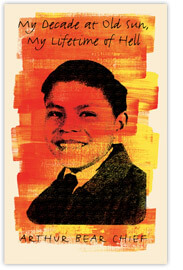 My Decade at Old Sun, My Lifetime of Hell
By Arthur Bear Chief
Athabasca University Press, $19.95
My Decade at Old Sun, My Lifetime of Hell is a short read, but one that should be read slowly and deliberately. Author Arthur Bear Chief describes the first years of his life as full of love, family, Siksika tradition, and culture—until he was sent to Old Sun Residential School at the age of seven. Recounting the abuse and cruelty that happened during his 10 years at the residential school, Bear Chief reveals how a stolen childhood affected the rest of his life. Bear Chief’s account is an honest and necessary look at a shameful part of Canada’s history—a reminder to readers that healing and reconciliation may take decades to be fully realized. Framed as a story, Bear Chief’s narrative will evolve as readers ponder its meaning to their own lives.
]]>