ILLUSTRATION BY HANA SHAFI
Growing up in a traditional first-generation Muslim-Canadian family, I constantly struggled to determine what career I wanted to pursue. For years, I faced the dilemma of whether to satisfy the vision my parents had created for me or to go out on a limb and pursue my own interests of joining the entertainment industry, ultimately as a talk-show host. The rarity of this occurrence in the Muslim community often stems from the constant exclusion by the media. While being a hijab-wearing Muslim-Canadian woman of colour with Pakistani roots are parts of my identity that I cherish the most, this identification in present-day society constitutes a life of trials and tribulations that I would have never imagined to complicate my career goals.
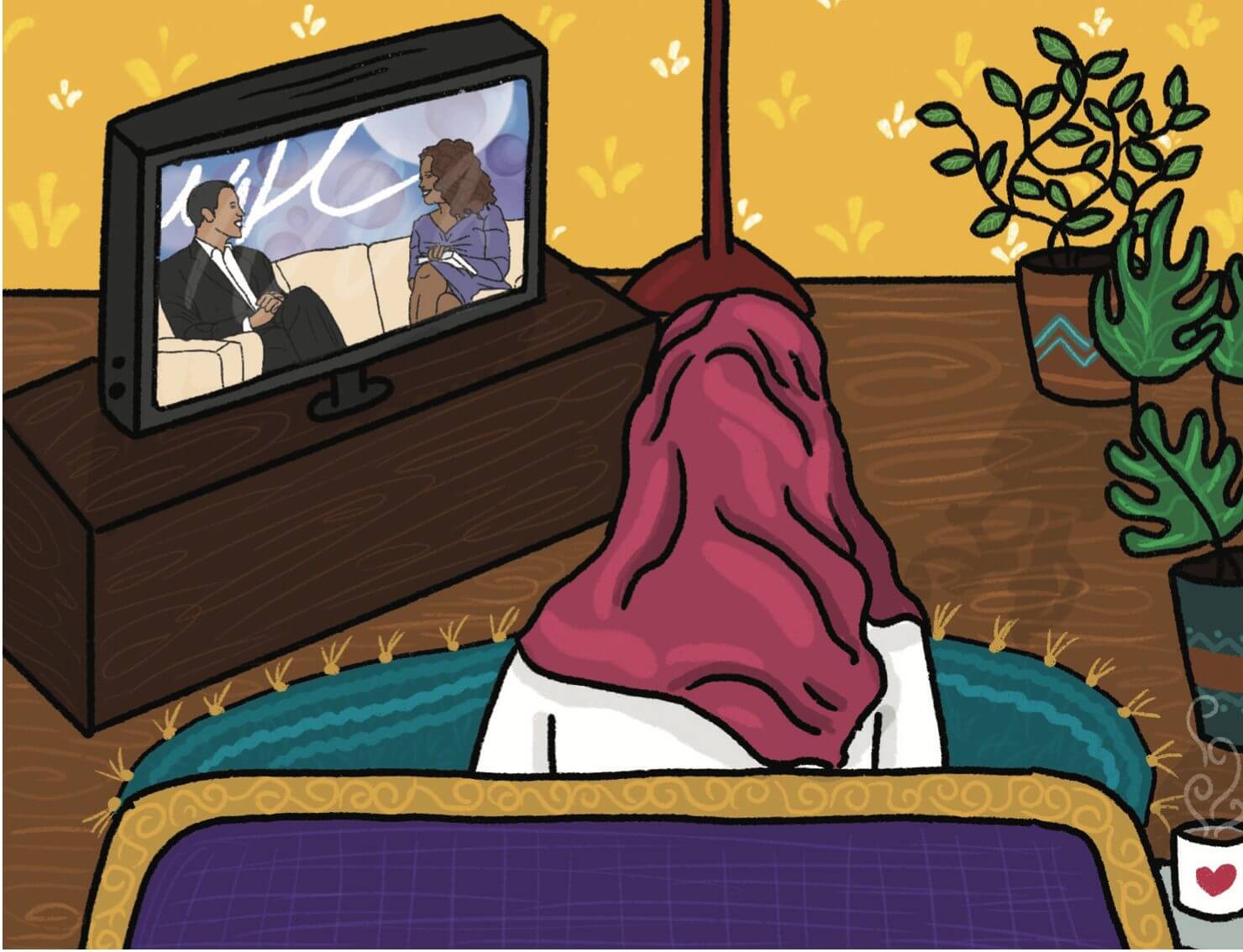
Everyone grows up with dreams and aspirations. Regardless of how grand or modest they may be, we never discourage our imaginations from roaming free. I personally have been an avid dreamer for as long as I can remember. Throughout my childhood, I would cultivate the most ambitious fantasies, encouraged by the individuals I witnessed on the television screen before me. Whether it was actress Zendaya, dancer Julianne Hough, or any of the talk-show hosts on the panel of The Real, I found myself absolutely mesmerized. With fluctuating dreams of becoming an actress, dancer, and talk-show host at one point in time or another, it wasn’t until high school that I actively decided to make a change. The moment I’d stumbled upon The Real in my sophomore year of high school, I became captivated by the idea of becoming a talk-show host and began treating it like an achievable possibility, rather than a mindless fantasy. I vividly remember performing a talk-show skit in front of my Grade 10 religion class and being hit with a wave of realization that this was my calling.
It was the first moment I became consumed with this vision, yet there was always one setback that instilled a sense of doubt and hesitation within me—my racial and religious identity.
From the greatness of icons such as Oprah Winfrey and Ellen DeGeneres, I was never able to overcome the fact that there was no reflection of someone who looked like me on the 21-inch Philips Box TV set I was so enamoured by as a child. The division between the plethora of white women and the scarcity of women of colour (of course, with the exception of the aforementioned Winfrey)—especially Muslim women—has always operated as an impression of unwelcomeness. Although it is the industry’s responsibility to work towards this much needed change, it is also up to us to raise our voices and ensure ourselves to be heard, paving the way for future generations. This world we occupy is extremely vast and embodies a plethora of unique groups and nationalities that unfortunately aren’t pictured on our screens. As Academy Award winner Octavia Spencer says: “Little kids need to be able to turn on the TV and see real-world representations of themselves.”
This seemingly American problem also bleeds into the Canadian media industry. Despite over a million Muslims calling Canada home, this one identity, which resonates with roughly 1.9 billion individuals across the globe, warrants far more representation than the obnoxious token character created in a careless attempt at diversity. What showrunners and producers fail to consider is the ways in which the images on our screens impact us past simple viewing pleasure.
These individuals possess great influence and behave as idols to people across the world—a world encompassing tremendous diversity.
Inspired by my mother, I first began to wear the hijab in Grade 3. While I was thrilled and in awe of the beautiful message it depicts, I wasn’t able to fully commit until five years later. As I went on to high school, there were plenty of other women who adhered to this practice as well. But I noticed it was something that instilled a sense of shame within them, similar to the hesitance I carried years prior. This is what happens when we are inclined to conforming to North American beauty standards that have never consisted of any Islamic or other ethnic traditions. The inadequacy of representation severely affects marginalized groups who are never celebrated in mainstream media. Although I grew up watching a fair amount of Bollywood,
I gradually slipped out of that cultural niche as many first-generation children do. I found myself regularly diverting my attention to Hollywood content any chance I had. Much to my dismay, however, I was incredibly disappointed to unearth that the dreamland of all these amazing productions was quite literally Black and white. Besides the quirky personalities simply incorporated as token Muslims, making a complete mockery of the religion, there was no depiction of someone like myself. With every female Muslim character being linked to harmful stereotypes or stripping her hijab off for a white boy, we are illustrated as powerless entities in need of saviours. Many even start believing it.
The entertainment industry is slowly waking up to the idea of change and permitting a more welcoming space for underrepresented groups. Iman Vellani is an up-and-coming actress from my hometown of Markham who will be playing the titular role in the highly anticipated TV series Ms. Marvel, making her Marvel’s first on-screen Muslim hero to headline her own comic book. It’s great to see Hollywood’s increased efforts in working towards diversity and representation for marginalized communities, yet they are heavily overdue.
We need to recognize that we are in the 21st century, living in the greatest melting pot of different cultures. It was only in late 2016 that Canada’s first hijab-wearing TV news anchor, Ginella Massa of Toronto’s CityNews, was cast. However, Massa serves as a role model for Muslim women all over the globe as she recently debuted her new CBC show Canada Tonight with Ginella Massa, which she describes as “basically a conversation with Canadians.” Ryerson School of Journalism alumna Zarqa Nawaz is another go-getter who has taken the burden upon herself and is doing an incredible job of putting Canadian-Muslim women on the map. With her work ranging from her personal creations of Little Mosque On the Prairie to her newest project Zarqa—in development with her own Regina-based production company FUNdamentalist Films—Nawaz is paving the way. In addition to being responsible for the conception of these two series, she will also be playing the lead in Zarqa, a show aiming to be the first mainstream Canadian comedy show told from the perspective of a Muslim woman.
As a journalism student in the heart of Toronto, I am surrounded by people from all walks of life and am constantly reminded of the variety in our world. I am dedicated to voicing the concerns of my nation as well as creating a positive and realistic image of my people. With aspirations as grand as mine, while identifying as a member of a stigmatized community, I’m cognizant of the fact that I have to work twice as hard. But I’m willing to do so. I will prove myself by following my dreams of becoming the very first hijab-wearing Muslim-Canadian talk-show host in Hollywood. I will strive to promote diversity and serve as an embodiment of hope, determination and possibility for future generations. As Academy Award winner Viola Davis says, “The only thing that separates women of colour from anyone else is opportunity.” I say it’s time to allow our people to access and maintain a platform. It’s time for real change and substantial advances to be taken. And it’s time to finally declare female Muslim representation.
]]>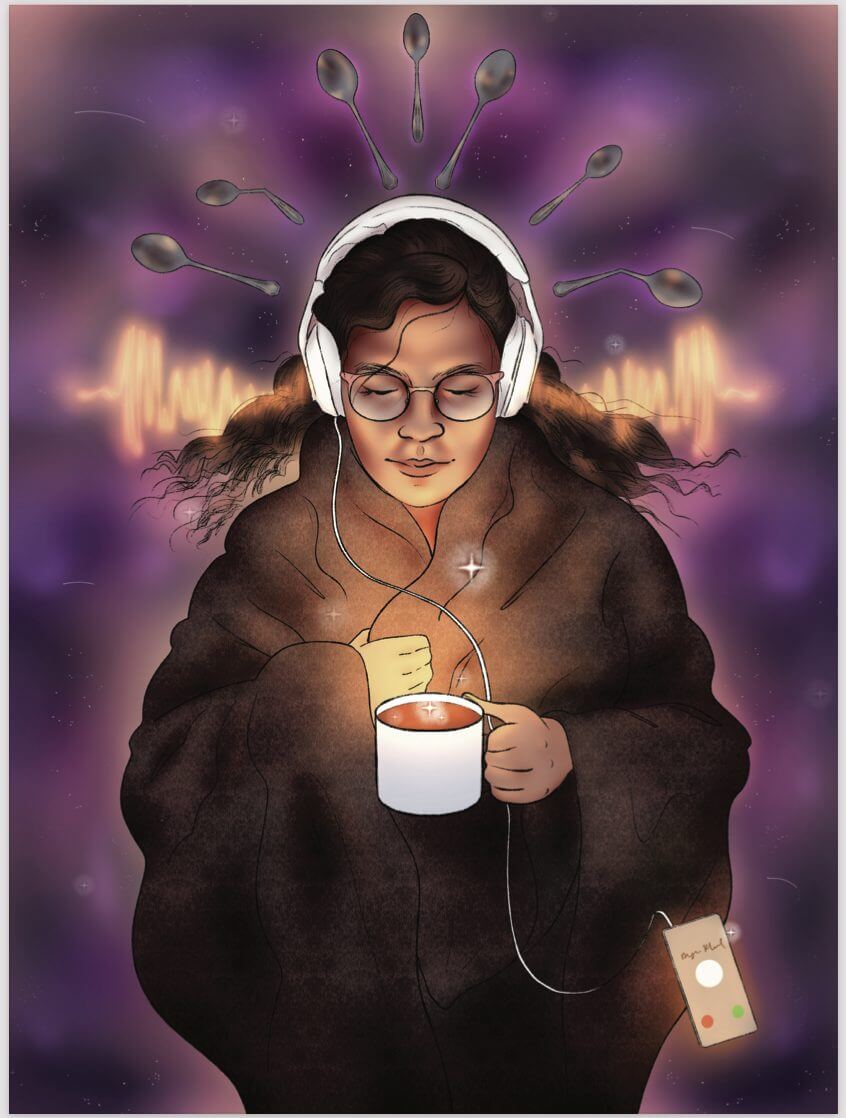
Illustration by Jasmine Noseworthy Persaud
For some, we are entering a dystopian-like era, with pandemic and zombie movies feeling uncannily familiar. In May 2020, the BBC noted that the public has had an increased interest in dystopian fiction as a way to cope or understand the pandemic. But, if we really want to learn about how to survive this newfound dystopia we live in, we need to turn to disability justice activists for the knowledge and skills they can share.
As Patty Berne from Sins Invalid, a San Francisco-based disability justice collective, explains in her essay “What is Disability Justice?” in the book Skin, Tooth, and Bone: The Basis of Movement is Our People, disability justice moves beyond just garnering rights for disabled people and focuses on finding alternative solutions to the systems that create inequity and building new futures. Now that the pandemic has illuminated the cracks in our systems that have been failing us in an almost undeniable way, we need those alternative solutions in an immediate way.
Being a part of the disabled community, I knew that there were lessons we had to share if we wanted to have a chance at turning this dystopia into a utopia. So I spoke to other disability justice activists about what it means to live through disaster, how disability justice prepared them for this pandemic, and what shiny new futures we could be building.
For marginalized groups like the disabled community, our world has been a dystopia long before COVID-19 developed into the widespread issue that it is now. That has given us the advantage of not being caught by surprise by the lifestyle changes that the pandemic has imposed on society.
“This isn’t a dance I haven’t had to dance before,” says Rachel Romu, a disabled model and activist known for walking the catwalk at Toronto Fashion Week, and also one of the first activists who encouraged me to get involved in my own activism.
They are referring to the isolation and inaccessibility that many are experiencing for the first time in this pandemic. Romu is used to socializing and working remotely; they’re used to using food delivery services and having to make choices for the sake of their health.
And this is a sentiment that seems to be echoed from across various different disabled experiences. “I’m used to being isolated,” writes Sage Lovell, founder of Deaf Spectrum, a Deaf-led, Toronto-based organization that provides ASL interpretation and resources. “Like, I didn’t have much of a social life pre-COVID. I was always working and saving up money. And growing up, I’ve always been on my own, being around a hearing-dominated environment.”
Even so, being prepared doesn’t mean that the disabled community is less affected mentally by it. In fact, the response to accommodate COVID-19 safety guidelines ended up highlighting just how little effort was previously put into finding these same accommodations to include disabled people into society, such as remote access to work and social events or grocery delivery.
“It’s frustrating because pre-COVID, I had to travel a lot and even suggested to video call once in a while. But folks always needed to meet in person,” explains Lovell. “Now with COVID, we’re meeting online.”
“I feel like part of me is built for this, but part of me is struggling,” says Romu.
For many marginalized people, disaster and apocalypse are not one-time or future events, but historical, ongoing, and recurring, according to Myriad (who prefers to go by their first name only), the founder of The Wheelhouse, a community centre in Toronto for and by marginalized people, and a facilitator of disaster preparedness workshops. They pointed to a theory from Lawrence Gross, the Chair of Native American Studies at the University of Redlands, called Postapocalyptic Stress Syndrome as an example. For Indigenous peoples, they have already experienced mainstream apocalypse tropes such as invading forces and outbreaks of disease. Therefore they also have to create and imagine the new worlds they need to survive.
Activists from oppressed groups already have the experiences to learn from and improve upon, if we as a society would pay attention.
Speaking with other disability activists, one thing became very clear to me: we approach our own health, as well as public health, in a very different way to our nondisabled counterparts, even and especially, pre-pandemic. As Romu puts it, we have to find “adaptive ways to do prophylactic self-care” instead of just responding to issues as they arise.
However, the Government of Canada’s response to the pandemic, as well as much of our healthcare system, has been criticized for lacking any real preventative measures. In fact, in 2017 Ontario’s Provincial Emergency Management Office had already noted in a news release from the Office of the Auditor General of Ontario that the province was not prepared for an emergency. But there’s more chance for success if you’re prepared for the worst-case scenario.
“There’s a layer of setting yourselves up for success instead of failure or disappointment too,” explains Romu. “It’s like being prepared to make the most of the time you are using in that minute, and sort of prioritizing what’s your number one need … how are you going to meet that and how can you meet that safely or accessibly.”
This is a strategy that is rooted in Spoon Theory, a term coined by Christine Miserandino to explain the process by which disabled and chronically ill people have to plan and prepare to manage their energy and pain to meet their daily needs.
According to Aus, Romu, and Lovell, what that would look like on a governmental level would be ensuring that people had the type of income they needed to stay home and isolate, ensuring that all people were housed, and providing access to medication
for all.
A major focus of disability justice activists is to move the onus away from the individual and more onto the community as a whole.
There are several models that are used to understand disability. One model is the medical model, which understands disability as a problem within an individual that needs to be fixed or cured. A contrasting model, however, is the social model, which understands disability to be the way in which our physical and social environments are designed to exclude certain people.
While disability and the pandemic are more nuanced than either of those models can describe, there is something that Aus refers to as “the burden of preparedness” that is placed on disabled and other marginalized groups because of the individualist nature of our society.
And as Romu points out, that is reflected in our response to COVID-19. Instead of ensuring that people can stay home and prevent exposure, there is only emphasis on wearing masks and keeping distance. While that is necessary, we need to move beyond an individual response to a major crisis.
They continued on to explain that we can’t blame individuals when not everyone has the same access to resources to be able to isolate, access masks, and do their individual part.
“Financial inequality is a big factor in who’s going to get sick and die or not, who is going to stay home or not, who is going to be able to have a room to isolate in or not,” they say.
Instead, we should be building systems that allow us to work as a community to respond to emergencies and trauma. This is something called interdependence, or community care, which are major tenets in the work of disability justice activists such as writer, educator and trainer of transformative and disability justice Mia Mingus.
Mingus helped develop the idea of “pods” and “podmapping” years before the pandemic started. Pods were the relationships that one could turn to when in need of support. When lockdown protocols began affecting North America and social contact was suddenly limited, Mingus’ work on pods grew in popularity alongside the idea of “social bubbles” because she had already developed a foundation that could be built on further.
The beauty of apocalypse and dystopia is that it gives us the opportunity to disrupt, dismantle, and change the systems that are currently in place.
As Aus puts it, “We see everywhere in apocalypse fiction ways in which the world is gonna end, because that’s what people love to fixate on. But we very rarely see ways that the world starts.”
Instead of trying to return to our “old normal,” we should be taking this time to adjust our society to incorporate these concepts into how we function. We need to change how our schools, workplaces, and other institutions function.
One example is, as Aus describes, “unraveling the entire culture of nine to five work.” Or, to use another concept from disability justice, adopting “crip time,” a more flexible approach to timeframes—the idea being that we incorporate more rest time and more leeway into our schedules, instead of trying to adhere to rigid deadlines and workdays.
And instead of trying to reopen schools and force a “return to normal” before the appropriate measures are in place to control this pandemic, and other future public health crises, we should be changing how those institutions work. Remote learning
and remote work should be available even after lockdowns lift and a vaccine is distributed.
And as we manage with the repercussions of this pandemic, we should follow at least one principle of disability justice, and that is to follow leadership based on the most impacted. When disabled and other marginalized communities are foreseeing potential danger and offering alternatives, we need to pay attention and make use of this vital source of knowledge and wisdom. Once that happens, we can finally move out of this dystopian landscape and start building a utopia.
]]>
“trophy 1 | julie rybarczyk” by shorts and longs is licensed under CC BY 2.0
To the people who have called me resilient:
I know you think that you were giving me some big compliment. I get it, I do. The first time someone called me resilient, I was young and terrified that no one would ever see how hard I was fighting. Then, the phrase “you are resilient” filled me not only with pride, but also with the overwhelming feeling that someone finally saw me. Each time the word resilient was used to describe me, it validated my experiences and made me feel as though my survival was impressive, rather than pitiful. Each time I was told I was resilient was a new gold star, an incentive, a reminder to keep fighting, keep going, keep toughing it out.
Recently, my mental health was crashing, so I gritted my teeth and found the strength to ask for help. After divulging how low I was feeling, how I was just trying to keep myself alive, I was met with, “Well, remember, you’re resilient. You’ll get through this.”
For years, I have heard it all, over and over again:
“God, I don’t know how you do it, you’ve been through so much.”
“Wow, you’re so strong.”
“You’re so brave.”
“You’ll get through this.”
I know you mean well, but can you not hear the exasperation in my voice when I respond, each time, with, “I know, I always do”?
Like my eighth participation trophy for pee-wee soccer that I didn’t even want to play, these words of yours sit dusty on a shelf, a reminder of something I had to do. It is no longer comforting to me to be told how strong I am. I know. I don’t need you to remind me that I went through a lot of really difficult things at a young age. I know. I’m the one who’s been working all these years to get here. I’ve been building up this muscle of resilience, as your praise twists in my mind and reminds me that as long as I keep going, as long as I stay strong—at the very least, you will be proud of me and impressed with me.
Here’s the thing: I’m exhausted. I hate this game, but I’ve been playing so long that I’ve convinced everyone that I can keep playing all day and night. If I slip up, I’ll get back on my feet like I always do, a little bruised, maybe, but ready to keep going.
When you tell me that I am resilient, who are these words really for? Are they to comfort and support me, or you? Do they make you feel better, because then you don’t have to fully confront the realities of my situation? Let’s be real: my trauma makes you uncomfortable. No one wants to think too deeply about the pain of others, but everyone loves to be in awe of those who are strong enough to overcome—as long as the way they overcome it isn’t too messy.
So, the question is: if I crumble, if my survival-mode looks different than what you are comfortable with, if I can’t keep up the façade that my resilience is like a well-oiled machine any longer … will you still be proud of me? Will you still tell me I am strong, or will I no longer be worthy of your praise and admiration? Will you offer me your hand, help me stand, or will you shy away, disappointed that the show pony can’t keep performing her old tricks?
Resilience is a muscle, really, and all humans have it. I just had to start building mine from a young enough age that, somehow, my resilience has been perceived as somewhat remarkable.
I know I am strong. But the most comforting thing you can tell me right now is that with you, I don’t have to be.
Yours truly and exhaustedly,
Kristy Frenken-Francis
Art by Valerie Thai
Ashwin Mehra’s mother had COVID-19 in Mumbai. In Toronto, he wasn’t sleeping well.
Before the diagnosis, even the thought of Mehra’s parents falling sick in India with him stranded in Toronto would keep him up at night. If they died, he knew he wouldn’t be able to attend their funerals.
And so, when his sister called one September weekend and said that their mother had tested positive, his worries found something to cling to. He ran through all the possibilities of what could happen in his head, barely sleeping for two nights. He reached out to a friend who was a travel agent to see if he could fly into Mumbai or Delhi, but eventually decided against it: India’s COVID-19 cases were rising and there was no guarantee he wouldn’t catch the virus. Continents away, he realized there was no way that he could help.
In his counselling sessions that week, Mehra, a clinical psychologist who works for a private practice in Toronto, listened to his clients’ worries around COVID-19—such as their own aging parents falling sick—unknown to them that Mehra could relate to those worries so intimately. One minute he was fine, and the next, he would be reminded of his mother—it was, for him, a week from hell.
To be a therapist, says Mehra, is to sit with people’s pain, to watch and listen while thoughts and emotions run their course. But in a global pandemic, while his own anxieties run rampant, that’s become harder to do.
On a May 2020 episode of The Social Work Podcast called “Shared Trauma in the COVID-19 Pandemic,” Carol Tosone, a therapist, says that on the morning of Sept. 11, 2001, she was in a session with a client named David. He was comparing a recent date to his overbearing mother when, at 8:46 a.m., a plane flew overhead their office in New York City, rattling the windows. It wasn’t until Tosone stepped outside that she realized the enormity of what had happened: her office was a mile away from the Twin Towers and she could see everything burning, a trail of grey ominous smoke billowing from the North Tower.
In the weeks that followed, Tosone found herself dreading her sessions with David, worrying that 9/11 might come up. Reflecting on her own experiences, she writes in a 2011 article in the journal Traumatology, “Was it his traumatic reaction
or mine that I was sensing?”
As a professor of social work at New York University, Tosone is one of few academics whose research has shaped understandings of shared trauma or shared traumatic reality. During times of war, natural disaster, or upheaval, therapists often live through the same traumas as their clients but put their own needs aside to help others. COVID-19 is no different, says Tosone, calling it “shared trauma on steroids.”
One of Mehra’s clients that week happened to mention India’s rising COVID-19 cases, which, at the time were peaking at 95,000 a day. His thoughts took him to his own mother, isolated in the COVID-19 ward of a Mumbai hospital. He didn’t say anything, and they carried on with the session—clients shouldn’t have to comfort their therapists.
Therapy has that visible but invisible nature to it, says Hillary McBride, an author and clinical counsellor based in Vancouver, B.C. Therapists are often discouraged from speaking about their personal experiences or worries, so they stay hidden from clients. And unlike medical care, the work that therapists do is largely hidden away from the public eye.
But, if there was ever a time when therapy was more needed, we’re living through it: a poll by the Angus Reid Institute found that 50 percent of Canadians reported a decrease in their mental health since the onset of the pandemic. Substance use is on the rise. People are lonely. Quarantining has been linked to anxiety and post-traumatic stress. Researchers have predicted that up to 2,114 suicides will have taken place in 2020 and 2021 across Canada, fueled by the pandemic’s mass layoffs.
As Suzanne Dennison, a psychotherapist, puts it, “the walking well are falling apart.”
Therapists contend with clients’ pain and trauma every day and, unsurprisingly, it can lead to burnout. Up to 67 percent of psychotherapists will experience severe burnout sometime in their career. But in a global pandemic, that stress is exacerbated, as therapists face their own worries and witness the toll that the virus has on everyday people. Lindsay Ross, a social worker with her own private practice in Toronto, has charted the pandemic’s progression through the eyes of her clients: when infection rates soared in the first wave, so did anxiety. As a mom of two, she’s felt that herself. She took a week off in May 2020 and then another in July to cope with the added stress and burnout, but says no therapist right now is completely free of it.
Once September hit and school started, it felt like she was throwing her kids into the dragon’s den.
Good therapy requires therapists to feel the grief, loneliness, and anxiety their clients carry, but still keep themselves separate from that pain. Connecting too deeply with clients, research has found, can lead to emotional exhaustion and added stress. Ross, too, struggles with this balancing act: her struggle is amplified by being a mother and a therapist, and balancing those roles. Ross emphasizes the importance of checking in with herself when it comes to absorbing her clients’ emotions.
“If you’re too empathetic, you’re sharing in an exorbitant amount of pain that these people you’re interacting with are going through,” says Steve Joordens, a psychology professor at the University of Toronto who has been studying anxiety during the COVID-19 pandemic and designed and teaches a course on how to manage anxiety during COVID-19. “And how to share it but not carry it is a difficult thing and not something most of us are wired to do.”
Before he became a therapist, Mehra was a management consultant in India in the early 2000s. While the job paid well and he was good at what he did, he couldn’t imagine doing it for the rest of his life. And so, he turned to Google for answers. The 50 vocational, aptitude, and personality tests he took pointed to more or less the same profession: counsellor, therapist, or psychotherapist.
“I was like, what the hell is this?” he says, laughing.
A friend suggested he try counselling, so Mehra signed up to be a suicide helpline volunteer at a Mumbai-based helpline called the Samaritans. For seven months, between June and December 2006, Mehra spent his weekends in a sparse apartment turned makeshift office, sipping tea and eating Parle-G biscuits, listening to callers who struggled with depression, suicidal thoughts, and anxiety. Helping those in distress was the most emotionally and spiritually rewarding experience of his life, he says, challenging him in ways that consulting never did. He eventually quit his job to attend New York University for a PhD in psychology.
More than a decade later, Mehra still finds his work deeply spiritual. As a therapist, he witnesses the fragility of human life and the addictions, depressions, and anxieties that ravage people in waking nightmares. But he also sees the beauty of life in the strength and resilience that people show in overcoming their traumas. When someone chooses to get help, they become a better friend, spouse, and child, and those effects are felt for generations to come. There have been countless times, says Mehra, when clients thanked him for saving their life. “The way I look at it, we’re all in this together,” he says. “I’m doing my part so there is less tragedy and unhappiness in the world.”
In her research, Tosone found that what buoyed therapists counselling during times of shared trauma was their sense of purpose. No one goes into therapy for money or prestige, says Kathy Offet-Gartner, a registered psychologist based in Calgary, Alberta, and the incoming president of the Canadian Counselling and Psychotherapy Association. “We do it because it’s a calling,” she says. “We do it because we genuinely care.” She’s been seeing clients for the past 38 years and says she’ll provide therapy until she doesn’t “have a brain cell left.”
“I will go to my grave with millions of secrets—not hundreds, not thousands, but millions,” she says. “And I hold each one of them as a treasure and as a gift. So, to stay well and to stay healthy is my responsibility.” She knows her work is
still needed.
At a memorial ground in Washington, D.C., there are over 200,000 small white flags planted in never-ending rows, printed with names of those who have died from COVID-19. Long after the pandemic stops taking lives, therapists will remain on the frontlines. The mental health effects of the pandemic are a tsunami we’ve barely seen the tip of, says
Offet-Gartner, and it touches everyone in some way. “I don’t have enough hours in the day to see people,” she said.
But as public health officials preach to mask, sanitize, and distance, it can be easy to assume that COVID-19 only affects our physical bodies. “This false dichotomy of separating mental health from physical health is an insane perspective,” says Offet-Gartner. “It’s the same damn coin. Why are we only flipping it always to be on one side, not the other?”
Beyond anecdotal evidence, there is virtually no research on the burnout or mental health effects faced by therapists counselling during COVID-19 or during the SARS epidemic in the early 2000s. What does exist, is ample research looking at the burnout faced by medical frontline responders. During SARS, nurses and physicians in Toronto, which had the largest outbreak outside of Asia, reported increased levels of burnout, psychological distress and post-traumatic stress disorder. Anna Banerji, an infectious disease specialist who worked during the tail end of SARS in Toronto in July 2003, said that most medical professionals were working 15-hour days and were traumatized: “Every time they had a kid with a fever, they assumed it was SARS.” While literature on COVID-19 is new, studies on burnout that have been done largely focus on physicians and nurses. One study looking at 1,257 medical healthcare workers across hospitals in China, for example, found that they were more likely to report anxiety, insomnia, and depression.
The lack of research on therapists’ mental health is symptomatic of a wider problem, says Abi Sriharan, an assistant professor at the University of Toronto’s Institute of Health Policy, Management and Evaluation. When we medicalize epidemics, we only see doctors and nurses as frontline responders, when, in reality, “healthcare is a team sport,” she says. Sriharan is researching the burnout and stress faced by healthcare providers—therapists included—during the pandemic.
In a culture that praises the everyday heroes on the frontlines, one is either a healthcare provider or someone needing help. Therapists are often seen by clients as being psychologically perfect, somehow immune to the stresses and anxieties that plague their clients, which can make it harder to seek help. It’s an ideal that clients like to uphold themselves: if therapists don’t have it all figured out, what hope do the rest of us have?
“For those who have ever looked at their therapists and wondered how they were so high functioning, I’ll let you in on a secret: we are not,” writes Brittany Wade, a psychotherapist based in New England, in a psychiatry journal. “So here I sit, at my little ramshackle home desk, in complete discomfort, reflecting on the irony that the very illness, anxiety, isolation, and loss that erode the mental health of my patients are now the main characters on my emotional stage.” In other words, it is impossible to exist without emotion or worry or stress, especially in a global pandemic.
Within a week, Mehra’s mother had turned around for the better. It was painful knowing that he couldn’t see her. He had to resign himself to updates on the WhatsApp family group chat and conversations with his mother, who offered frequent updates on the food served in the hospital ward that day. Though he felt the added strain in each of his sessions that week, providing therapy also helped him cope—he couldn’t help his mother, but he could help the person in front of him.
It’s frontline responders like therapists that play the invaluable role of healing the broken and will continue to long after we’re all vaccinated. But they are only human, and these days, that means burnout can come with the job.
]]>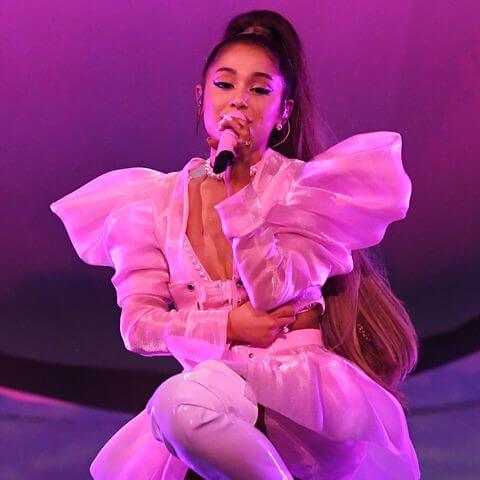
Photo by [email protected], licensed under CC BY 2.0
Pop singer Halsey begins her 2020 album, Manic, with a quote from Eternal Sunshine of the Spotless Mind: “I’m just a fucked up girl who’s looking for my own peace of mind.” It’s hard to imagine Katy Perry or even Lady Gaga starting a record the same way 10 years ago, but in today’s music landscape, this approach is par for the course. This is an opener for the age of post-resilience pop.
In 2015, philosophy professor Robin James argued in her book, Resilience and Melancholy: Pop Music, Feminism, Neoliberalism, that we were living in an era of resilient pop music, where songs musically and lyrically reflected neoliberalism’s obsession with resilience. Resilience, according to James, acknowledges systems of oppression, but suggests they can be overcome through personal strength. James focused on pop-inflected electronic dance music (EDM), which dominated charts at the time, blending club-ready electronic dance music with poppy vocals from stars like Sia and Nicki Minaj, who sang about freedom and fun over dissonant synths and frantic beats building to a cathartic drop. This was the logic of resilience, wrote James: “noise into signal,” pain into persistence.
Since 2015, though, these songs have become fewer and farther between. A new era of pop has come into being, what Jon Caramanica of the New York Times calls Pop 2.0. Defined by its hybridity, Pop 2.0 brings together trap, Latin-pop, alt-country, and more. Those EDM strategies of build-up and release are still around, but now in the form of down-tempo trap beats, not hyped-up anthems. As Pitchfork’s Jayson Greene has written, this new pop is also kind of a bummer—influenced by the rise of emo rap and streaming’s encouragement of low-key atmospheres, the songs are usually more concerned with sadness than strength.
A new generation of stars has come of age with this ethos—Billie Eilish, who writes about nightmares and demons, and Julia Michaels, whose biggest hit to date is titled simply, “Issues.” On her 2020 album Rare, Selena Gomez sings about the importance of staying vulnerable. These new pop stars are more likely to dwell in darkness than chase light, to whisper-sing their problems rather than belt them away. Their music doesn’t require an immediate bounce back; it has space for prolonged pain and failed recovery.
Ariana Grande, possibly currently the biggest pop star in the world, is also the best example of this style. The former Nickelodeon actress has lived through multiple traumas in the public eye and processes them through her music. On 2018’s “breathin” she sings an ode to anxiety; on 2019’s “fake smile,” she refuses to pretend she’s fine. The title track from that same record, “thank u next,” is a song about gratitude for love gone wrong. In 2012, it probably would have had a soaring chorus, propelled by pulsing synths. In the age of post-resilience, though, the song sounded like a breeze: light and laid-back,
not interested in overcoming but passing through.
The reasons for this shift are multifaceted: it capitalizes on a trend towards performed vulnerability on social media, where every micro-influencer is expected to be “real” with their followers, instead of simply aspirational. These new stars also grew up listening to hip-hop and pop punk, where the lyrical content has always been engaged in internal struggle. And, of course, it gestures towards a generation in crisis: teenagers becoming adults faced with mountains of student debt, a precarious labour market, and environmental ruin, to say nothing of politicians or pandemics. If resilience is the edict of neoliberalism, post-resilience pop is music for neoliberalism’s failures. It acknowledges that whatever is wrong has no quick fix. Though the vulnerability can feel overly performed, the damage carefully curated, it’s more interesting than motivational platitudes.
In 2020, there were already signs that pop is pushing past its depressive period: Dua Lipa racked up streams with her disco-ish bangers and Grande released an album about new love (and new sex). Megan Thee Stallion and Cardi B provided an empowerment anthem with “WAP” that was invested not in clichés of strength, but the pleasures of Black women’s sexuality.
Wherever this new pop goes, it won’t save us—change happens in the streets, not on the charts—but it can give us different modes for understanding pain and power, and a helpful reminder that when you’re not okay, you’re also not alone.
]]>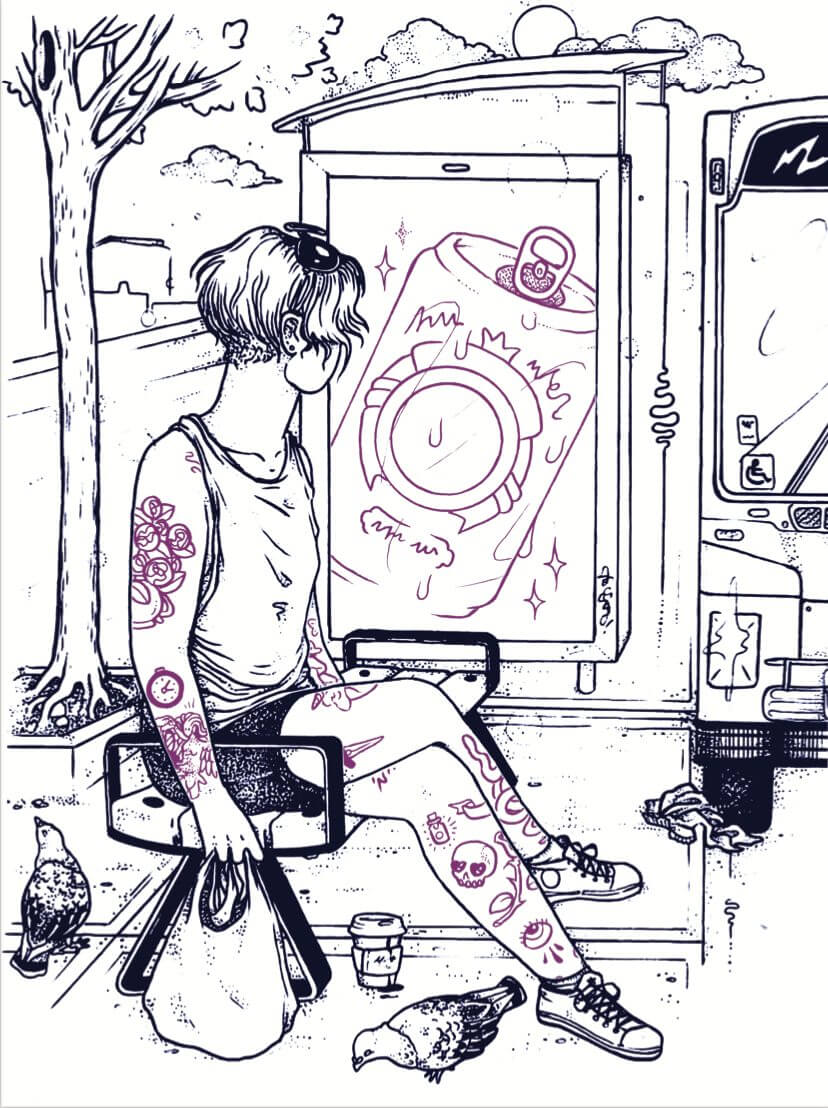
Illustration by Bug Cru
One of the big changes in my life as I’ve gotten older has been becoming an insomniac. My brain has decided to forgo the signals that I am asleep and should remain so until an appropriate hour sometime in the waning hours of the dawn, and instead wakes me up around 1 a.m. This time is the sweet spot when nothing good happens, but your defences are asleep. It is when I used to be able to rely on a drink to calm me down and bring me back to being tired. It is when I realize how alive I truly am.
I’ve been sober for a little over two years, a decision I made impulsively one afternoon after a lovely house party where I simultaneously had a lovely time and wanted to kill myself—fight or flight at its finest. It wasn’t too long after that last bout of drinking before the cracks in my dependencies started to show themselves. A friend is playing a show at a bar downtown and your friend group will be there, but also you know it’s a room full of strangers. What are you going to be holding in your hand that will help keep all your anxieties in check? You’ve been invited to speak on a panel about mental health in creative industries and the conversation gets difficult. How are you going to calm your nerves and your heart after an hour of hard questions you don’t have an answer to? These were the types of questions I would ask myself, stray thoughts rattling around my brain desperate for a solution. Drinking, for me, was part of a comprehensive anxiety management system—a toolkit I kept in my closet full of broken tools and the end of a roll of tape, but one I kept telling myself was sufficient to suit my needs. This is all I’ll ever need, I’d tell myself, just me and this rusty hammer with a broken handle against the world.
During a stressful event it is easy to keep one hand on the wheel if the other is holding a whiskey, neat. In 2016, when Donald Trump won the presidency of the United States, I joined in the game that was to take a drink when things looked bleak. I stayed up all night watching that broadcast and had no idea who had won the next day, but I was well aware of the headache and it smelled like I had tried to cook something that was still sitting on the counter. I wasn’t alone in this either; ask anyone where they were that night, and the majority are going to come back with, “I was at a bar,” or “a friend’s house that had projected CNN onto the wall. BYOB.”
I quit drinking in March of 2019, a spring day like any other. I marked the occasion by getting a tattoo on my right arm of a self absorbed harpy gazing longingly at herself in a hand mirror. This was also my first test—with every tattoo I’d had before that I drank a shot of whisky before, just to settle my muscles and nerves to prepare them for the road ahead. Never let anyone experience pain without a suppressant, I’d thought. I had a quad-shot Americano, black, and smoked two cigarettes on my walk to my appointment. Replacing vices with others, just trying to find a new way to feel. That tattoo hurt like hell, but it’s the first one of many that I’ve felt in my bones, every nerve sending a signal to my brain letting me know I was alive and present and experiencing pain, but that it would be okay.
That subsequent summer was my first one living in Toronto, having escaped the Yukon the past winter. The Yukon is where I learned to drink, where I snuck my first quarter bottle of red wine, where I brought my first six-pack of Mike’s Hard Cranberry Lemonade, that my sister had to run and buy for me, to a house party in Grade 12, when I was trying to find a place to belong at the end of my high school career. One of the cool kids on the couch saw me pull the bright red bottle out of my bag and called me a faggot. I dumped all six in the sink as everyone laughed at me, then stole six cans of lukewarm Kokanee from another kid’s bag when he wasn’t looking. “See, now you’re a man,” the cool kid said when I cracked that first can. What I drank was every bit as important as the fact that I did. The Yukon is where I came out and told everyone in my life that I am a transgender woman. It’s where I drank through that first year of being out, when people surrounded me at my office trying to get in the door, calling me slurs and making vague threats before smashing bottles of wine against the locked door. The Yukon is where I drank until I tried to end my life, and took myself to the hospital to keep me safe from my own drunken hand. I told everyone that I was having stomach problems. That seemed easier to explain than I had drank too much and tried to tap out early. The Yukon is where I ran away from the problems that had piled too high for me to see over anymore.
And here I was now, in Toronto, my chosen home. Sober and alive for the first time. I hit my first summer with open eyes, ready to experience the sun and the life I hadn’t lived for 37 years. This was not without its challenges. Every bus stop I walked by had a six-foot picture of a cold mug of beer, cold beads of water running down the side, ensorcelling me with the power of its refreshment. I would duck into any nearby corner shop and buy a tall can of soda water with a high fructose level, or maybe an iced tea. Give me something cold and refreshing that hits me just right, help me forget that I have to fall asleep with my own unfiltered thoughts. But, all the same, every day took me one step closer to learning I didn’t need alcohol to get me through. Every day took me further from the darkness I had left behind that last winter in the Yukon. Here, I could sit in the sun and smile, drink a grapefruit LaCroix and walk home at a reasonable hour without spiralling the entire time. I felt every emotion in every step I took and I understood that I needed to feel them. That I could no longer run or hide from emotional pain, that I had to walk through it.
One year after I stopped having “just one more drink,” the world learned of the dangerous state of COVID-19 and we entered a prolonged state of isolation. Everywhere around me, people were stockpiling toilet paper and whiskey in equal measure. I wasn’t sure I had built a better toolkit to prepare myself for such an unexpected event by then, one that was sure to be filled with new traumas and anxieties, as an uncertain future rolled itself out ahead of each and every one of us.
I watched the numbers climb, and I tried to drink enough coffee in the day to keep my hands from shaking too much, bringing back that old familiar feeling when I would drink brown liquor for days on end, trying to act like nothing was wrong. I began endlessly searching for the right flavour of soda water that would erase my uncertainty of the future. I watched people celebrate Susan Orlean live-tweeting her experience of drinking herself incoherent and felt a twinge of jealousy and regret. I wanted to be able to live so freely, but I knew how dangerous that was. How easily being the fun drunk that cheekily succumbs to alcohol, much to the amusement of everyone around them, becomes the sad drunk that takes themself to the hospital. I stopped sleeping properly and laid awake at night worrying for the future of my partner, our pets, and our life together. I wondered how long we could stay isolated from the people that made us all feel safe and connected. How long could I keep the wolves at the gate?
What I learned from these nights of being awake is how important the hard emotions are in our lives. My brain doesn’t stop working at night, but I am aware and cognizant of that. I can spend the endless hours awake wondering why I am feeling anxious, where my depression and fears are coming from, and rational ways I can try and manage them the next day. I think about how hard everything is, and how I am sure we will see the other side, but how no one knows what shape we will be in when we get there. I think about who I am, really, now that I’m not that scared person running from their problems but living deep in them. I lie awake at night, sober as the day is long, and sneak into the bathroom to cry so I won’t wake anyone up. My bare feet on the cold and rough concrete floor, every nerve sending a signal to my brain letting me know I am present and experiencing pain, but that it would be okay. When my defences have been done away with, and in the hard hours of an insomniac’s night, I realize how alive I finally am.
]]>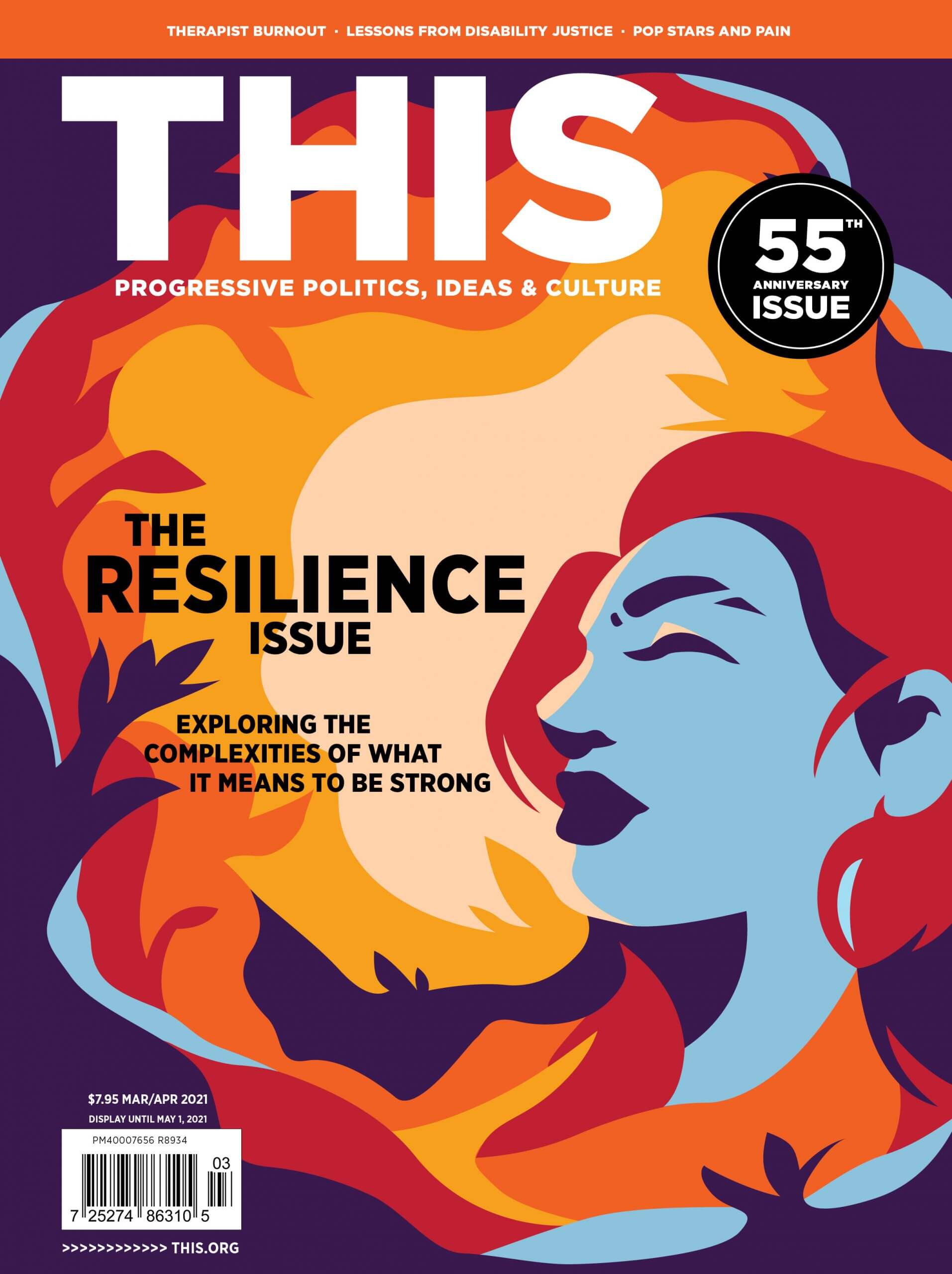
Cover illustration by Jessica Oddi
In her book, How To Lose Everything, writer and musician Christa Couture tells a story of loss and resilience. She loses her leg to cancer at a young age; she loses two sons early in their lives, and a marriage; another health scare threatens her career. Yet, she overcomes. She writes, “I think of something my Toronto therapist said once: ‘Resilience sucks.’ Meaning, resilience is born of suffering. A person doesn’t discover their capacity to survive until it is tested.”
Resilience seemed like an obvious theme to us, but a complex one. This issue marks our 55th anniversary as a publication. As you’ll learn in the timeline in our front section, This started in 1966 as a journal about education; it was one of the first alternative journals in North America. Publishing as an independent not-for-profit magazine takes resilience. We’ve published through changing political landscapes, the start and end of many progressive publications and projects; we’ve published with limited resources and funding delays. But we’ve published with a consistent mandate: to bring you stories and perspectives left out of the mainstream media. We often cover acts of resistance, but much of our regular coverage fits under the umbrella of resilience too.
So, how do we give respect to those who have survived and thrived without glorifying resilience itself ? How do we prioritize community supports, mutual aid, and government accountability and avoid any kind of “pull yourself up by the bootstraps” sentiment?
In “How to survive a dystopia,” Mari “Dev” Ramsawakh looks at what we can learn from the disability justice movement. Disabled people have long required the resources many non-disabled people have only recently come to need in the context of the pandemic. Disability activists have been dreaming and planning for what is needed to create utopias in the future, to go beyond survival. In “The cost of caring,” Mariyam Khaja looks at the experience of therapists during the pandemic. Often thought of to be superhuman and devoid of emotions themselves, therapists are burning the candle at both ends, and they’re burning out. In “Sobriety is a verb,” Niko Stratis looks at drinking as a coping mechanism and what changes when one takes on sobriety as an act of resilience.
In October, University of Ottawa professor Michael Orsini wrote a piece for Policy Options called “Stop asking us to be resilient.” In it, he suggests that it is time to retire the term resilience, that it is a “plastic word.”
He asks, “What if resilience is just another way of saying ‘get over it’? What if a positive attitude is not enough to pull you out of poverty? What if dealing with hatred and racism is not made better by just not letting it get to you?” before explaining that “the resilience industry is rooted in an individual model of change, one that leaves untouched the structures and systems that are responsible for the trauma in the first place.” Is it possible, then, to respect the resilience people have mustered to-date, while pushing for large-scale systemic change that would eliminate the need for that in the future? We hope so.
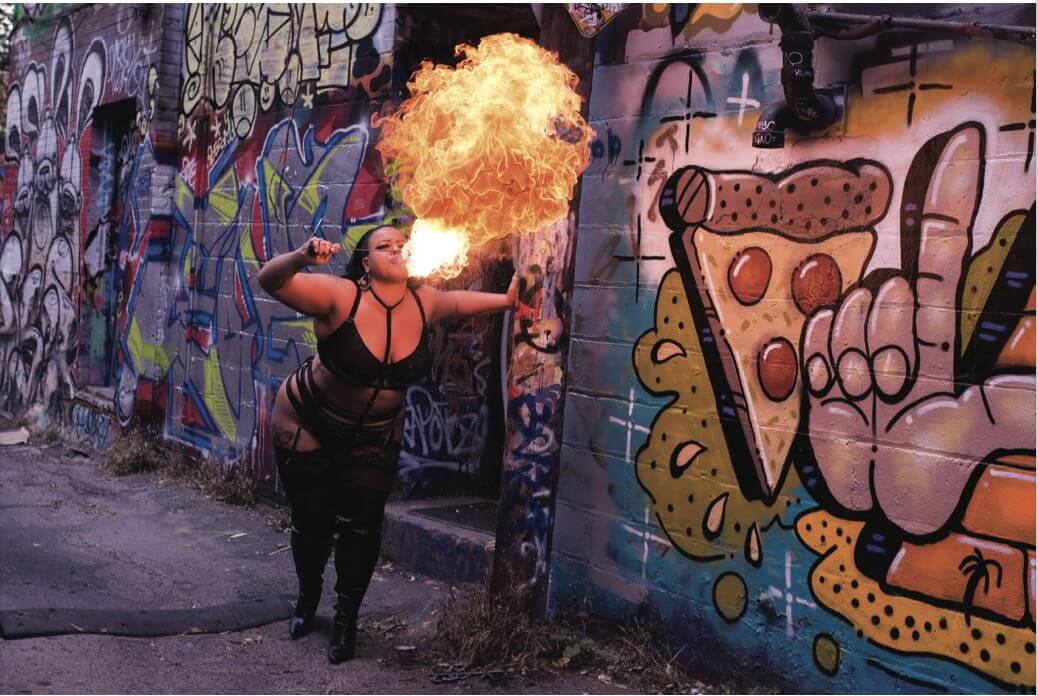
IVORY, PHOTO BY CRAVE BOUDOIR
Body positivity can be a harrowing but joyful process. Shana Myara made it a life goal. “I gave myself a project where I could fully explore fat liberation with other queers,” says Myara, director of the documentary, Well Rounded. “Particularly from the lens of racialized queers who might also have a critique of how bodies are expected to conform.” In her first full-length feature film, officially released during the pandemic in May 2020, Myara offers an unapologetic and honest look at our culture’s obsession with diet culture and the systemic issue of fatphobia.
Over the phone, Myara acknowledges she is calling from the traditional territories of the Musqueam, Squamish, and Tsleil-Waututh peoples (Vancouver). She explains that she came to the idea of Well Rounded when she started to hate her own body—outside of her home. “I realized I was not taught to hate my body in my home,” she admits. Myara remembers growing up in her Moroccan household as they spoke about themselves as “large” and fondly referred to their thighs. “Quickly, I learned from a young age, the way I had to view my body outside the home was very different.” This contrast became the catalyst for Well Rounded, as Myara explores how our cultural backgrounds affect our relationships to our bodies.
Using a mix of personal interviews with queer Indigenous comic Candy Palmater, multidisciplinary artist Ivory, model and stylist Lydia Okello, and queer Taiwanese-Canadian activist and storyteller Joanne Tsung, juxtaposed with playful, colourful animations by Hungarian-Russian illustrator Alexandra Hohner, each emotional story weaves together over 60 minutes of compelling facts and narrative in a genre-bending flow. “It turned out to be one of my favorite parts of creating the documentary,” Myara gushes. “The surreal and the fantastic sometimes more accurately represent what we experience internally.”
Since the film debuted in October 2020 at the Inside Out LGBT Film Festival in Toronto, Ontario, during the COVID-19 pandemic, Myara admits it has been a hard season and that since shifting online, some festivals have scaled back their programming. She believes there has been a lost opportunity for discussion related to body politics, and the chance to have a collective celebration of our bodies. But in the meantime, Well Rounded is being shown across Canada, with screening and festival applications underway for 2021.
]]>
PHOTOGRAPH BY JULIE RIEMERSMA
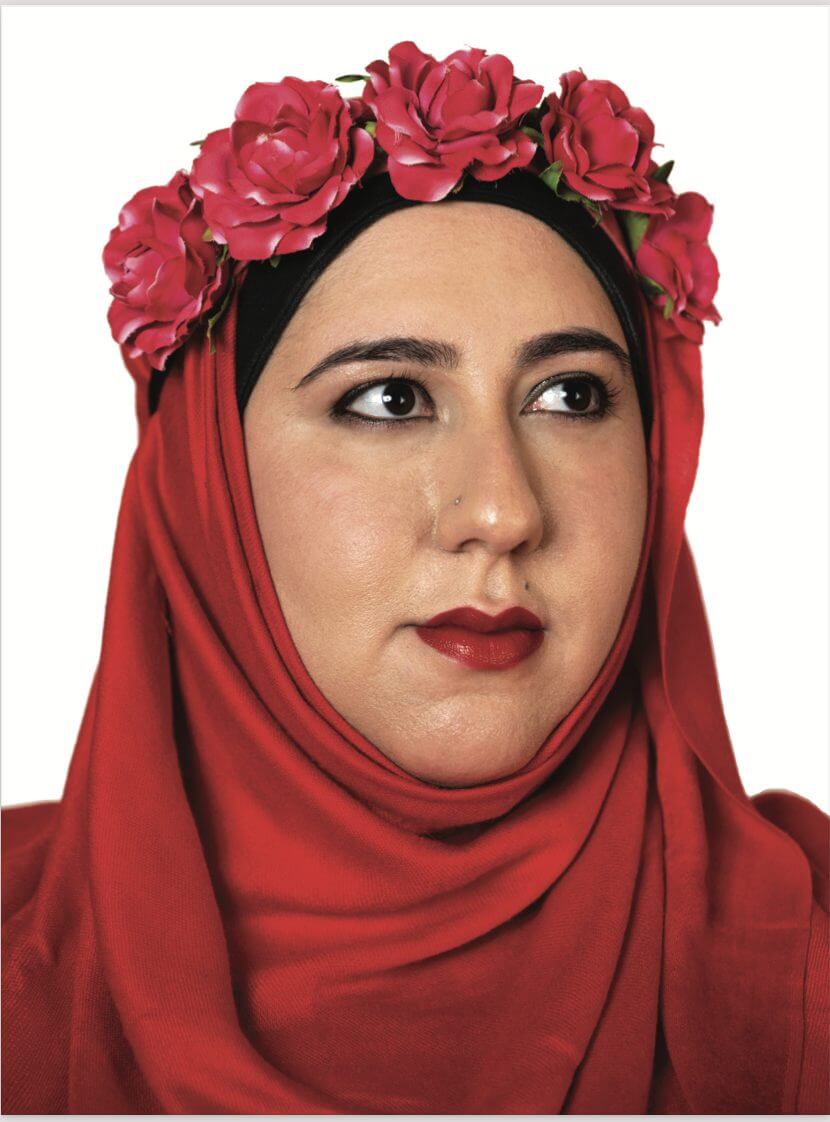
From an early age, Hanan Hazime remembers being immersed in the arts. As a young child, she loved painting, dressing up in costumes, and creating elaborate stories. Now, at the age of 30, Hazime is a multidisciplinary artist whose work ranges from politically charged paintings to nature poetry. As a Lebanese-Canadian, non-neurotypical, and invisibly disabled, Shia Muslim woman, Hazime has had many personal encounters with gendered Islamophobia, racism, and ableism in her life. Her artwork often grapples with these issues and allows others to share and better understand a small part of her lived experiences.
“I wanted to dispel stigmas about Muslim women, about Arab women, about disabled or mad folk, because those are all my identities … My art is trying to show that first of all we exist, and that we matter. And that we can take up space and I think that’s very important to have that representation,” Hazime says.
In university, Hazime focused on raising awareness about a variety of human rights issues through demonstrations, protests, and organized change. However, she found that artwork seemed to be more effective in evoking the viewer’s emotions and raising awareness about social issues.
“Art is the way that I do my activism … I found that people have connected to me more through art, because art affects your soul and your heart and that’s where the change needs to happen,” she says.
While Hazime’s political paintings are important for her self-expression and educating others, Hazime explains that some of her non-political artwork is often rejected by exhibits and collectors as she becomes tokenized for her identity.
She recalls a specific incident where she had written a story about a woman who suspects a mermaid is living in her bathtub. The story was a magical tale exploring women’s sexuality and was rejected by literary publications as it didn’t explore any “-isms” or modes of oppression.
“They are always searching in my story for those ‘-isms’ because they’re automatically assuming that whatever I create is always going to be about these political issues that I’m facing. I can never exist as a human. I always have to exist as this political symbol,” she says.
Building on her passion for writing, Hazime is aiming to have her first novel published this spring. Growing up, Hazime had a difficult time seeing herself represented in mainstream media. She would read two books a day and never saw similar characters reflected in these novels.
“The younger generation, when they look up and they see a Muslim woman creating art, they’re going to think ‘I can create art too. I can write a novel. I can write poetry. I matter. My voice matters,’” she says.
The plot of her novel-in-progress, Unmoored, centres around a Lebanese-Canadian teenager named Zaynab who struggles with mental illness while navigating high school culture. The book is very loosely based on Hazime’s own experiences growing up in a working-class family and not having access to therapy, which she hopes portrays the realities of mental illness for the less privileged.
“It’s basically a book that I would have loved when I was 16. I’m writing it for my past self,” she says.
While Hazime’s work often touches on serious issues dealing with her identity, she explains that she is able to move beyond society’s focus on “-isms” and see people for who they truly are.
“I’m looking beyond race, gender, ability, and class and all those social constructs…. The skin that I’m in is just a shell that I’m in temporarily in this world,” she says.
]]>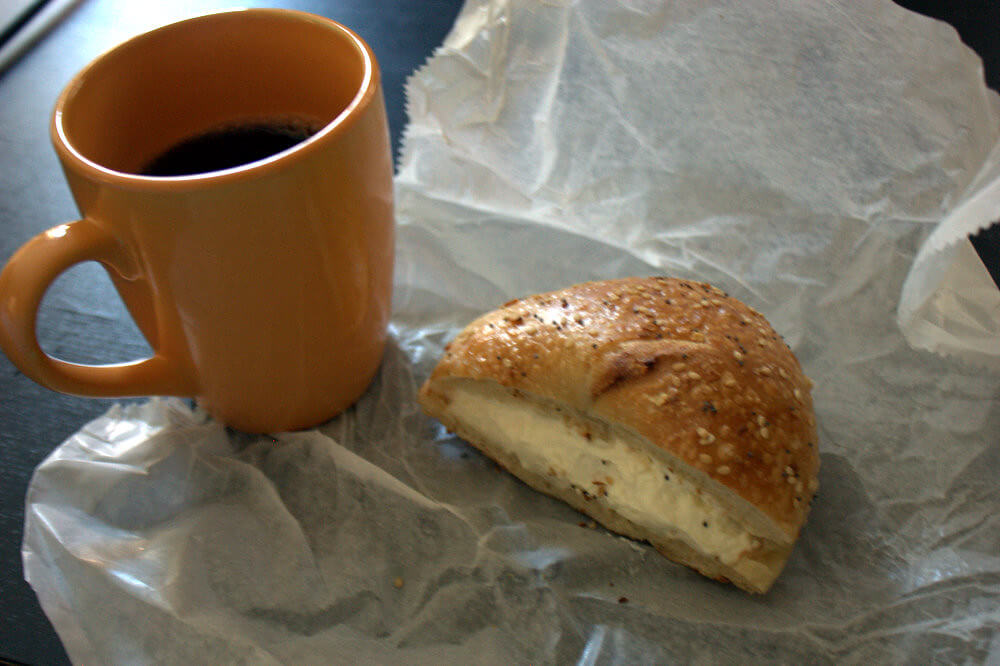
Photo by goodiesfirst, licensed under CC BY 2.0
Why people love it
Approximately 4.4 million Canadians (about one in eight households) experienced food insecurity in 2018, according to Statistics Canada. Token programs at various restaurants aim to fight hunger by encouraging patrons to buy low-priced tokens which can then be handed out to someone in need and redeemed for a meal or snack. One example of such a pay-it-forward system is The Nook Espresso Bar and Lounge in Halifax. Since January 2018, the café offers a $10 sandwich or a $7 coffee–bagel combo for free with a token. Tokens are handed out on the street and distributed by community organizations, but if someone doesn’t have a token, they can buy one upfront ($5 for a sandwich or $2 for a coffee and bagel). Similar programs exist in Vancouver and Edmonton.
What’s the problem
Small businesses are picking up where governments failed to mitigate a public health issue. Programs like these provide surface solutions, but food insecurity is rooted in income inadequacy and poor infrastructure (for example, the lack of affordable grocery outlets and accessible transportation for those living in food deserts). Patterns of hunger also point to systemic racism; studies have shown that the highest rates of food insecurity are found among Black and Indigenous households. Inequitable policies create the problem and the token programs are only a Band-
Aid solution.
Tokens help make space for those struggling to cover their basic needs amidst rising food costs, but healthy communities are hardly built on bagels. While a warm breakfast could help restore colour to a person’s face after a night on the streets, a booth in the corner isn’t the same as affordable housing for the homeless. Similarly, a café can provide access to clean washrooms and sharps containers for drug users, but those are not substitutes for safe injection sites and addictions services. It is important to recognize that chronic hunger is compounded by problems that exceed the scope of token programs.
Nutrition is a human right. Everyone deserves the security of being able to predict their next meal. Charity doesn’t provide this. Furthermore, giving tokens instead of cash implies that people experiencing poverty can’t make decisions about their own spending, writes food activist Peter Driftmier in his critique of token programs for the online publication The Mainlander.
Possible solutions
Hold elected officials accountable to their promise to end hunger, as laid out in the 2019 Food Policy for Canada and the United Nations Sustainable Development Goals in 2015. Advocate for policies that promote an equal standard of living across the socioeconomic spectrum, including a livable minimum wage, designated affordable housing and improving public transit in low-income neighborhoods to help those living in food deserts. Donating time or money to organizations working directly with people facing homelessness or addiction, and supporting initiatives to strengthen local food systems through community gardens and affordable produce markets are other ways to build towards a society in which no one is forced to choose between paying bills or buying groceries.